
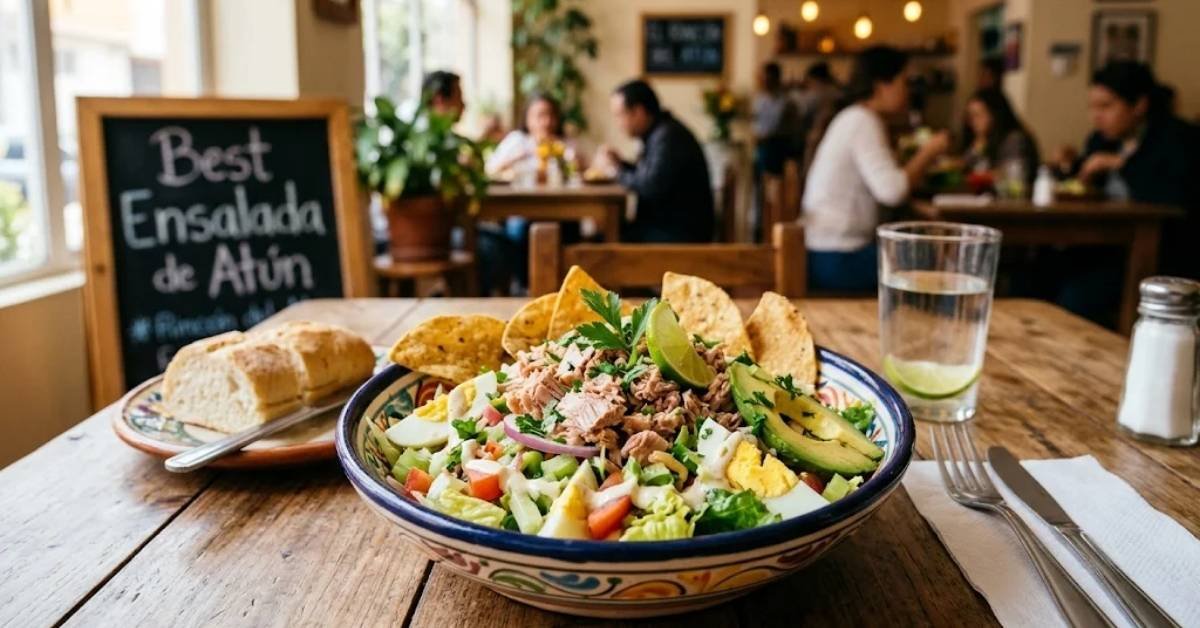

Ever stared at a can of tuna and wondered if it could be more than a boring desk lunch? Or searched “ensalada de atun near me” and landed on recipes when you wanted a real bowl to eat?
This guide covers both worries. You will learn where the dish comes from, why people love it, how to find a great version nearby, and how to make it at home.
Quick Answer: What Is Ensalada de Atun?
Ensalada de atun is the Spanish name for tuna salad. It mixes canned tuna with fresh vegetables like tomato, onion and lettuce, then adds a dressing such as lemon, olive oil or mayonnaise.
The style changes by country and by family. Mexican versions often arrive on tostadas or saltine crackers with avocado and hot sauce, while Spanish versions lean on olives, egg and olive oil.
| Quick Fact | Details |
| Main ingredient | Canned or jarred tuna (atun) |
| Typical add ins | Tomato, onion, cilantro, avocado, corn, lime, olives, egg |
| Prep time | About 10 to 15 minutes |
| Served | Cold, on tostadas, crackers, lettuce cups, bread or rice |
| Fridge life | About 3 days in an airtight container |
The History of Ensalada de Atun
Tuna has fed Mediterranean communities for thousands of years. Coastal Spain, Italy and North Africa all built traditions around preserving fish in salt, oil and brine.
Modern canned tuna changed everything. Once canning spread in the early 1900s, tuna became cheap, safe to store and easy to carry into any kitchen.
Across Latin America, the dish settled into home cooking. In Mexico, ensalada de atun is a familiar pantry meal, and many families lean on it during Cuaresma (Lent), when meat is skipped on certain days.
How the Dish Changed From Country to Country
Spanish cooks often build a plate with tuna, tomato, onion, boiled egg and olives. A drizzle of olive oil and sherry vinegar finishes it.
Mexican home cooks usually go for crunch, heat and acid. Think diced cucumber, jalapeño, lime juice and a scoop of avocado on top.
Other homes stretch the dish with pasta, rice, corn or potatoes. That version turns a light lunch into a filling dinner.
The Benefits of Ensalada de Atun
People ask whether this dish is actually good for them. The honest answer is yes, when you keep the mix balanced.
Tuna brings lean protein, and a small can can deliver roughly 17 to 22 grams per 3 ounce serving, depending on the brand. It also provides vitamin B12, selenium and some omega 3 fatty acids, especially in albacore.
Fresh vegetables add fiber, vitamin C and crunch. Swapping part of the mayo for Greek yogurt or olive oil trims saturated fat without killing the flavor.
Why Busy People Love It
- Fast: Ready in about 10 minutes with no cooking.
- Affordable: A can of tuna costs far less than most proteins.
- Flexible: Works for lunch boxes, tostadas, wraps and meal prep.
- Filling: Protein keeps you full longer than a plain veggie salad.
A Safety Note on Mercury
Tuna contains mercury, and some types hold more than others. U.S. guidance from the FDA and EPA lists canned light tuna as a “best choice” at about 2 to 3 servings a week, and albacore as a “good choice” at about 1 serving a week.
Pregnant women and young children should follow official guidance closely. If you have a health condition, check with your doctor before making tuna a daily habit.
Where to Find the Best Ensalada de Atun Near You
Finding a great bowl takes a little detective work. Most restaurants do not list it as “ensalada de atun,” so you need to search smart.
Start with places that serve Mexican, Spanish and Latin American home cooking. Taquerias, tostada shops, seafood cafes, tapas bars and neighborhood fondas are your best bets.
Smart Ways to Search Locally
- Search “tostada de atun,” “tuna tostada” and “ensalada de atun” together on Google Maps.
- Read recent reviews and photos to see if the tuna looks fresh and the toppings look crisp.
- Check Instagram and Facebook food groups for local recommendations.
- Ask the staff whether the tuna salad is made fresh daily.
- Visit Latin grocery stores, since many sell ready made tuna salad in the deli case.
Signs of a Good Bowl
- The vegetables are cut small and look bright, not watery.
- The tuna tastes clean, with no strong fishy smell.
- The dressing is light enough that you can still taste the lime or olive oil.
- Tostadas or crackers arrive crisp, not soggy.
If nothing nearby impresses you, do not sweat it. Making your own takes less time than waiting for delivery, and you control every ingredient.
Tips for Making the Best Ensalada de Atun
A great bowl starts with good tuna. Choose tuna packed in water or olive oil, and drain it well so the salad does not turn soupy.
Cut your vegetables small and even. Smaller pieces mean every bite has crunch, acid and heat in balance.
A Simple Ensalada de Atun Recipe
Serves: 2 to 3 | Time: 10 minutes
Ingredients:
- 2 cans (5 oz each) tuna, well drained
- 1 ripe tomato, diced
- 1/4 red onion, finely chopped
- 1/2 cucumber, diced
- 1 small jalapeño, minced (optional)
- 2 tablespoons chopped cilantro
- Juice of 1 lime
- 1 to 2 tablespoons mayonnaise or Greek yogurt
- Salt and pepper to taste
- Avocado, tostadas or saltines for serving
Steps:
- Flake the tuna into a bowl with a fork.
- Add the tomato, onion, cucumber, jalapeño and cilantro.
- Stir in the lime juice and mayo or yogurt.
- Taste, then adjust salt, pepper and lime.
- Chill for 15 minutes, then serve on tostadas with avocado.
Pro Tips for More Flavor
- Rinse the onion in cold water for 30 seconds to soften its bite.
- Add acid last so the vegetables stay crisp.
- Try pickled jalapeño brine for a tangy kick.
- Toss in corn, olives or chopped egg for a different style.
- Dress it right before serving so crackers and lettuce stay crunchy.
Storage and Food Safety
Keep leftovers in an airtight container in the fridge for up to 3 days. Do not leave the salad out for more than 2 hours, or 1 hour in hot weather.
Conclusion
Ensalada de atun proves that a simple pantry can still deliver big flavor. It is quick, budget friendly, protein rich and flexible enough to fit almost any taste.Whether you hunt down a great local spot or mix your own bowl at home, you now know what to look for.
Try the recipe above, then tell us in the comments how you make yours.Do you go spicy, creamy or extra crunchy? Share this guide with a friend who needs a better lunch idea, and keep the conversation going.
FAQs
What does ensalada de atun mean?
It means tuna salad in Spanish, where “ensalada” is salad and “atun” is tuna.
Is ensalada de atun healthy?
Yes, it is a good source of lean protein, especially when made with Greek yogurt or olive oil and plenty of vegetables.
How long does ensalada de atun last in the fridge?
It stays fresh for about 3 days in an airtight container.
What do you serve with ensalada de atun?
Tostadas, saltine crackers, lettuce cups, bread, rice and avocado slices all work well.
Is Mexican ensalada de atun different from Spanish tuna salad?
Yes, Mexican versions use lime, jalapeño and cilantro, while Spanish ones often use olives, egg and olive oil.
Can I make ensalada de atun without mayo?
Yes, use olive oil and lemon, plain Greek yogurt or mashed avocado instead.
How often can I eat tuna salad safely?
Canned light tuna is generally fine 2 to 3 times a week for most adults, while albacore is better limited to about once a week.