
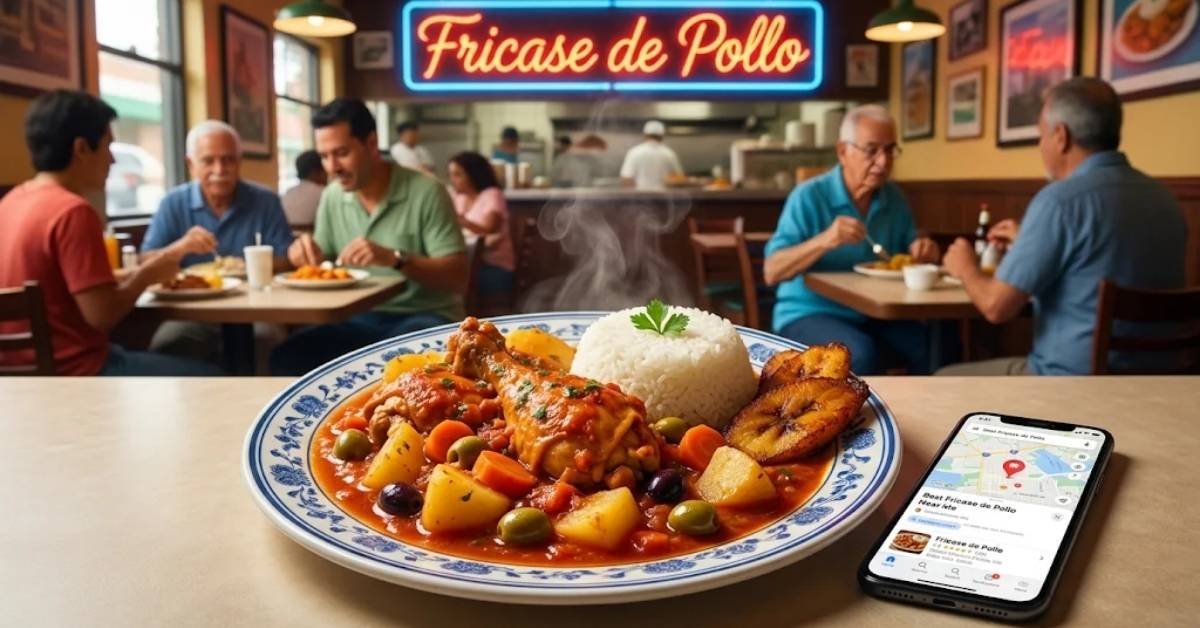

Few dishes feel as comforting as a bowl of fricasé de pollo. The chicken falls off the bone. The potatoes soak up a tangy tomato sauce. A spoonful of white rice makes the whole plate complete.
This guide covers the story behind the dish, what it offers nutritionally, and how to spot a great plate when you search for fricasé de pollo near me. You will also find a list of well-known Cuban restaurants, plus practical tips for cooking it in your own kitchen.
History of Fricásé de Pollo
The word fricassee comes from French cooking. A classic fricassée sears the meat lightly, then finishes it with liquid in a covered pot. Cuban cooks kept that method and gave it a new identity.
How a French Technique Reached Cuba
Food historians tie the dish to French influence in the Caribbean. One Cuban culture publication suggests that the stew most likely arrived through Haiti, though no one can confirm the exact path. What we know for sure is that French colonists and Haitian migrants shaped the food of eastern Cuba.
How Cuban Cooks Made It Their Own
Cuban kitchens swapped heavy cream sauces for a lighter, brighter base. The Cuban version uses:
- Sofrito made from onion, garlic, and green bell pepper
- Tomato sauce and dry white wine
- Green olives and capers for a salty, briny kick
- Raisins in some family recipes for a hint of sweetness
- Potatoes to make the pot stretch further
The result is a Spanish and Caribbean stew with French roots. Many families treat it as a Sunday meal or a dish for guests, because one chicken can feed a full table.
A Dish With Famous Teachers
Cuban cookbook author Nitza Villapol taught generations of islanders and exiles how to make this stew. Her influence is one reason the recipe looks similar in Havana, Miami, and New Jersey today. Puerto Rican cooks also make a fricasé, so you may see small variations on menus, such as rice cooked right into the pot.
Nutritional Benefits of Fricásé de Pollo
A well-made fricasé de pollo is a balanced one-pot meal. It combines lean protein, vegetables, and carbohydrates in one bowl.
Exact numbers change with the recipe. One published family recipe lists about 256 calories per serving, but restaurant portions with extra oil, rice, and fried plantains will be higher.
| Ingredient | What It Adds |
| Chicken (bone-in) | Protein, B vitamins, zinc |
| Potatoes | Potassium, vitamin C, complex carbohydrates |
| Tomato sauce | Lycopene, vitamin C |
| Bell pepper and onion | Fiber, antioxidants |
| Garlic | Sulfur compounds, flavor without extra salt |
| Olives and olive oil | Monounsaturated fats |
| Peas (in some recipes) | Plant protein and fiber |
Why the Cooking Method Matters
Slow simmering keeps the nutrients in the sauce, so you eat what the chicken and vegetables release. Removing the skin lowers saturated fat. Using bone-in pieces adds body to the broth without extra cream or butter.
Searching for the Best Fricásé de Pollo Near Me
Typing “fricasé de pollo near me” into a map app is a good start. A few extra checks will help you find a plate that tastes like home cooking instead of a reheated shortcut.
Smart Search Terms to Try
- “Cuban restaurant near me”
- “Cuban stewed chicken near me”
- “Fricase de pollo lunch special”
- “Cuban food delivery” plus your city
Try the Spanish spelling with and without the accent. Some menus write “fricase,” and others write “fricassee.”
6 Signs of an Authentic Plate
- Bone-in chicken. Boneless pieces dry out faster in a long simmer.
- A glossy, red-orange sauce. It should coat the spoon, not look thin or watery.
- Visible olives and soft potatoes. Both should be present, and the potatoes should hold their shape.
- Classic sides. Look for white rice, maduros (sweet plantains), or tostones (twice-fried green plantains).
- A daily or weekend special. Stews taste best when they are cooked in large batches that day.
- Spanish-speaking regulars. A busy lunch crowd is often a good sign.
Questions to Ask Before You Order
- Is the fricasé made in house each day?
- Is it served with rice, or is rice extra?
- Does it contain raisins, if you prefer it without them?
- Do you have a smaller portion or a lunch size?
Where Cuban Restaurants Are Easiest to Find
Cuban food is most common in Florida, especially Miami and Hialeah, as well as Tampa, Union City in New Jersey, and parts of Texas, California, and Puerto Rico. If you live far from these areas, search for Caribbean or Latin American restaurants. Many of them make a close version of the dish.
Top Cuban Restaurants Serving Fricásé de Pollo
Menus change, so always confirm that fricasé de pollo is available on the day you visit. The restaurants below are well-known Cuban names in Miami, and most are good starting points if you are traveling to South Florida.
La Carreta
La Carreta is a family-owned Cuban restaurant that was opened in 1976 by Cuban exiles. A Travel Channel guide to Miami highlights its fricasé de pollo, which is served with white rice and sweet plantains. The chain has several locations, including one on Southwest 8th Street, which is famous for its rooster sculpture out front.
Versailles
Versailles has served Little Havana since 1971 and carries a MICHELIN recommendation. It is known as a gathering place for Cuban coffee, hearty plates, and conversation. Ask your server whether a stewed chicken dish is on the menu that day, since daily specials change.
Sergio’s
Sergio’s started more than 40 years ago and grew into a small group of restaurants around Miami. It is also known for its “La Flaca” lighter menu, which suits diners who want a Cuban meal with fewer calories. Check the lunch combo list for stewed chicken options.
La Rosa
La Rosa has been serving Cuban and Spanish dishes for decades. Its menu leans toward home-style cooking, so it is a good place to ask about fricasé as a special.
How to Verify a Restaurant Today
- Open the restaurant’s Google Business Profile and read the newest reviews.
- Search the reviews for the words “fricase” or “stewed chicken.”
- Call ahead and ask if it is on today’s menu.
- Check delivery apps for photos from real customers.
Health Benefits of Fricásé de Pollo
Fricasé de pollo can fit into a balanced eating pattern when you manage portions and salt. These are the main benefits.
Supports Muscle and Fullness
Chicken is a good source of complete protein. A protein-rich meal helps you feel full for longer and supports muscle repair.
Delivers Antioxidants From Cooked Tomatoes
Cooking tomatoes makes lycopene easier for the body to absorb. Bell peppers and garlic also add plant compounds that are linked with a healthy diet.
Offers Heart-Friendly Fats
Olive oil and olives provide monounsaturated fats. These are part of Mediterranean-style eating, which researchers often link with better heart health.
Provides Energy From Whole Foods
Potatoes give steady energy and potassium, a mineral that supports normal blood pressure when it is part of a varied diet.
Things to Watch
- Sodium. Olives, capers, canned sauce, and seasoning packets can add up.
- Fried sides. Tostones and maduros are delicious, but they raise the calorie count.
- Portion size. Restaurant plates are often large. Consider sharing or taking half home.
This content is for general information and is not medical advice. If you manage a health condition such as high blood pressure or diabetes, talk with your doctor or a registered dietitian.
Tips for Cooking Fricásé de Pollo at Home
Home cooks can make this stew in about 45 to 90 minutes, depending on the recipe and cut of chicken. The process is simple, and the stove does most of the work.
Ingredients You Will Need (Serves 4 to 6)
- 3 to 4 pounds of bone-in chicken pieces
- Juice of 1 lime or sour orange
- 4 to 6 garlic cloves
- 1 onion and 1 green bell pepper, chopped
- 1 cup tomato sauce
- ½ cup dry white wine
- 2 to 3 potatoes, cut in chunks
- ½ cup green olives and 1 tablespoon capers
- Olive oil, salt, pepper, cumin, and oregano
- Optional: raisins and peas
Step-by-Step Method
- Marinate. Coat the chicken with lime juice, garlic, salt, pepper, and cumin. Rest it for 30 minutes or overnight.
- Sear. Heat olive oil in a heavy pot. Brown the chicken until golden, then set it aside.
- Build the sofrito. Cook the onion, pepper, and garlic in the same pot until soft.
- Add liquids. Pour in the tomato sauce and wine. Scrape the browned bits from the bottom.
- Simmer. Return the chicken, then add potatoes, olives, capers, and a splash of water or broth. Cover and cook on medium-low heat for about 45 minutes.
- Finish. Stir in peas near the end. Taste and adjust the salt.
Pro Tips From the Kitchen
- Do not skip the sear. It builds the flavor base that defines a true fricassee.
- Choose thighs and drumsticks. Dark meat stays tender during a long simmer.
- Rinse your olives and capers. This reduces extra salt.
- Add potatoes later if you like firmer chunks. Smaller pieces cook faster.
- Use a Dutch oven or pressure cooker. Both work well, and a pressure cooker saves time.
- Let it rest. The stew tastes better after 15 minutes off the heat, and even better the next day.
What to Serve With It
- White rice
- Maduros or tostones
- Boiled or fried yuca with garlic mojo
- A simple avocado and lettuce salad
Storage and Reheating
Keep leftovers in a sealed container in the refrigerator for up to 3 days. Reheat gently on the stove with a splash of water. It also freezes well for up to 3 months.
Conclusion
Fricasé de pollo is more than a chicken stew. It is a mix of French technique, Spanish flavor, and Caribbean warmth that has stayed on Cuban tables for generations.When you search for fricasé de pollo near me, look for bone-in chicken, a rich tomato sauce, and a restaurant that cooks in small daily batches.
If a Cuban restaurant is not close by, a pot of homemade stew is within easy reach. Start with the method in this guide, adjust the seasoning to your taste, and enjoy a true taste of Cuba.
FAQs
What is fricasé de pollo?
Fricasé de pollo is a Cuban chicken stew cooked with potatoes, tomato sauce, wine, olives, and sofrito. The chicken simmers until it is soft and falls off the bone.
Is fricasé de pollo Cuban or French?
The technique comes from French fricassée, but the flavors are Cuban. Sofrito, olives, and tomato sauce give it its Cuban identity.
What does fricasé de pollo taste like?
It tastes savory, tangy, and slightly briny. Some versions add raisins for a touch of sweetness.
What is the difference between fricasé de pollo and arroz con pollo?
Fricasé de pollo is a stew served with rice on the side. Arroz con pollo cooks the rice and chicken together in one pot.
What goes well with fricasé de pollo?
White rice is the classic partner. Sweet plantains, tostones, and yuca with mojo are also popular.
How do I find the best fricasé de pollo near me?
Search for Cuban restaurants, read recent reviews that mention the dish, and call ahead to confirm it is on the menu.
Is fricasé de pollo healthy?
It can be. It offers lean protein, vegetables, and olive oil, but watch the sodium and fried side dishes.
How long does it take to cook fricasé de pollo?
Most home recipes take 45 minutes to 1 hour 30 minutes. Bone-in chicken needs more time than boneless pieces.
Can I make fricasé de pollo in a slow cooker or pressure cooker?
Yes. Sear the chicken first, then cook it on low for 6 to 8 hours in a slow cooker, or about 15 to 20 minutes under pressure.
Can I freeze fricasé de pollo?
Yes. Freeze it in airtight containers for up to 3 months, and thaw it in the refrigerator before reheating.