

You got a text that just said “dw.” No context. No explanation. Just two letters staring back at you.So what does it mean? Is your friend annoyed? Are they brushing you off? Or is this just normal texting shorthand that everyone else already understands?Here’s the short answer before we go deeper:
in almost every case, DW meaning in text points straight to “don’t worry.” It’s a small phrase that carries a lot of warmth once you know how to read it. This guide breaks down every angle, so by the end, you’ll never second guess this abbreviation again.
What Does “dw meaning in text” Mean in Text?
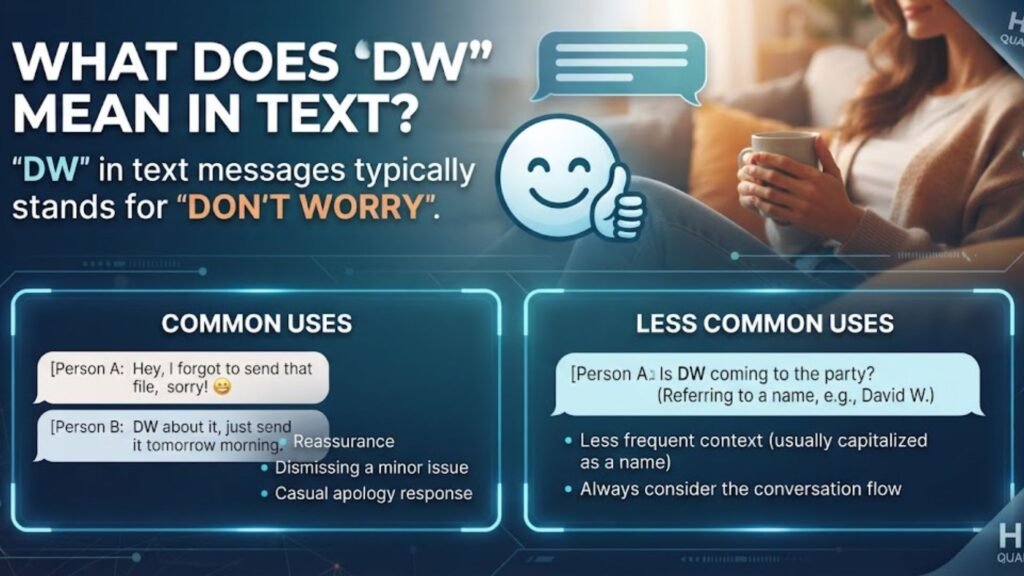
At its core, DW stands for “don’t worry.” People type it when they want to calm someone down, wave off a small issue, or say “it’s fine, forget it” without typing out the whole sentence.
Think about the last time a friend apologized for replying late. You probably typed back “dw, it’s all good” without even thinking twice. That’s the whole magic of this DW abbreviation. It saves time, softens the mood, and keeps the chat conversation moving without sounding cold or robotic.
This isn’t some brand new invention either. DW slang meaning has been floating around texting culture for years, quietly doing its job in the background of millions of daily chats.
The Most Common Meanings of “dw meaning in text”
Most of the time, DW text meaning boils down to reassurance. It’s the digital version of a friend putting a hand on your shoulder and saying “relax, it’s handled.”
But context shifts things a little. On WhatsApp or Instagram, it usually means “don’t worry about it,” plain and simple. In gaming chats, someone might type “dw” to tell teammates to stay calm after a mistake instead of spiraling into panic mid match.
There’s also a rarer, almost sentimental use. Some people, especially in older or more formal writing, use DW as “Dear Wife.” You’ll spot this mostly in letters, cards, or old-school forum posts, not in casual Discord servers. And if you’ve ever worked in IT or business analytics, you already know DW can mean “Data Warehouse” too, a completely different world from friendly text slang.
How “dw meaning in text” Is Used in Real Conversations
Picture this. A coworker messages you, “hey sorry I forgot to send that file yesterday.” You reply, “dw, I got it covered.” That single word carries kindness, patience, and zero drama, all in two letters.
DW chat meaning shows up everywhere once you start noticing it. On Snapchat, a friend might send “dw about the plans, we’ll figure it out.” On dating apps, someone running late might get a quick “dw, take your time” that instantly eases the tension.
It’s the tone that matters here, not just the letters. Friendly communication thrives on these tiny gestures. A three letter word can quietly say “I’m not upset” faster than a full paragraph ever could.
Is “dw” Rude, Flirty, or Offensive?
Here’s the honest truth. DW is rarely rude and almost never offensive. It’s usually one of the gentlest things you can type. But like any slang, the tone depends heavily on what came before it.
If someone sends a long, heartfelt message and gets a flat “dw” back with nothing else, that can feel dismissive. It’s not the word itself causing trouble, it’s the lack of warmth around it. Pair it with an emoji or a follow up sentence, and suddenly it feels caring again.
Can it be flirty? Sometimes, yes. In a dating chat, “dw, I like when you’re a little late” adds a flirty tone instantly. Context really is king here, and reading the full conversation matters more than fixating on one abbreviation.
How to Respond When Someone Says “dw”
So someone just sent you “dw.” Now what? The good news is there’s no wrong answer, as long as your reply matches the mood.
A few solid, low effort options:
- “Okay, thanks” for a simple, appreciative close
- “Alright, cool” when you want to keep things light
- “Got it” for quick, casual chats
- “I appreciate it” when someone’s easing a bigger worry
- A funny reply like “well now I’m definitely worried” if the vibe allows for humor
Professional replies call for a slightly different approach. Something like “understood, thank you” works better in workplace communication than a casual “np” would. Matching tone to setting is half the skill of texting well.
Common Misunderstandings About “dw”
One frequent mix up happens when people confuse DW with the word “down,” especially in messy autocorrect situations. Someone types “dw for pizza tonight?” meaning “down for pizza,” and the reader assumes “don’t worry,” which makes zero sense in context. A little context awareness clears this up fast.
Another misunderstanding involves reading too much into short replies. Not every quick “dw” hides a deeper meaning. Sometimes people are just busy, driving, or juggling five conversations at once. Overthinking messages is one of the most common texting mistakes out there, and it usually causes more stress than the original text ever did.
Cultural background plays a role too. Someone new to online slang might genuinely wonder, “what is DW in texting?” and feel embarrassed to ask. There’s no shame in it. Slang evolves fast, and nobody learns it all at once.
Similar Slang Terms You Should Know
Once you’ve got DW down, a handful of related terms will make your digital communication even smoother.
- NP – “no problem,” basically DW’s close cousin
- IDK – “I don’t know,” used constantly in casual replies
- TBH – “to be honest,” great for opinions
- BRB – “be right back,” a classic pause signal
- FR – “for real,” used to emphasize sincerity
- NGL – “not gonna lie,” a softer way to admit something
- IKR – “I know, right,” agreeing enthusiastically
- WYD – “what are you doing,” a casual check in
Learning these together builds real fluency in Gen Z slang and internet acronyms, so you’re never left guessing mid conversation again.
When You Should Avoid Using “dw”
DW shines in casual texting, but it doesn’t belong everywhere. Skip it in formal writing, work emails, or anything that lands in front of a client or manager. “Don’t worry about the delay” simply reads better in a business communication setting than “dw about the delay.”
Cross-cultural communication deserves extra caution too. Not everyone reading your message grew up around English text abbreviations, and a stranger’s confusion can turn a friendly gesture into an awkward pause. When you’re messaging someone from a different background or region, spelling things out avoids unnecessary mix ups.
Sensitive or serious conversations also call for full sentences. If a friend is genuinely anxious about something big, a bare “dw” might feel too breezy. Adding a little more warmth, like “hey, dw, I’ve got your back on this,” keeps the caring tone intact without sounding dismissive.
DW in Professional and Tech Spaces
Outside of casual chats, DW wears a completely different hat. In IT and database systems, DW almost always refers to Data Warehouse, a centralized system that stores and organizes business data for reporting and analysis.
Work teams discussing DW reports aren’t talking about feelings at all. They’re referring to structured data pulled from a Data Warehouse for decision making. If you jump between a gaming chat and a business analytics meeting in the same afternoon, the letters “dw” can mean two entirely unrelated things within a few hours. That’s the fun and occasional confusion of professional abbreviation overlap.
Why Slang Like “dw” Keeps Evolving
Text slang never really sits still. What starts in gaming communities or dating platforms often spreads to social media within weeks, then becomes normal everyday language.
DW survived this long because it solves a real problem. Typing full reassurance takes time, and sometimes a conversation needs speed more than formality. Quick replies like this keep momentum going, especially in group chats where five people are talking at once.
As new platforms rise and messaging habits shift, expect DW meaning to stick around. It’s simple, it’s universally understood among regular texters, and it does exactly what it promises, easing tension in two letters flat.
FAQs
What does “dw” mean in texting? It usually means “don’t worry,” used to reassure someone or brush off a small issue casually.
Is “dw” polite? Yes, in most cases. It’s a gentle, low pressure way to comfort someone without sounding preachy.
Can “dw” be rude? Rarely, and only when paired with a cold or dismissive tone elsewhere in the conversation.
Is “dw” used in formal writing? No. Stick to full phrases like “don’t worry” in formal emails or official messages.
What is the full form of “dw”? Most commonly “don’t worry,” though it can also mean “Dear Wife” or “Data Warehouse” depending on context.
Can “dw” mean something else? Absolutely. Outside casual chats, it often refers to Data Warehouse in tech and business analytics settings.
Should I use “dw” in exams or emails? No, avoid it in academic writing, exams, or professional messages. Save it for casual, friendly texts.
Final Thoughts
Slang like DW proves that language keeps finding shortcuts for kindness. Two letters, one small gesture, and suddenly a tense moment feels a little lighter.Next time someone sends you “dw,” you’ll know exactly what’s going on, no guessing required.
And now that you’ve got the full picture, from casual texting to workplace communication to the occasional Data Warehouse curveball, you’re ready to use it (or skip it) exactly when it fits.Got a slang term that still confuses you? Drop it in the comments, chances are plenty ofpeople are wondering the same thing.