

You just got a text that said “ofc.” Now you’re stuck wondering what your friend actually meant.Did they sound annoyed? Were they just being quick? Or is there some hidden tone you’re missing?This happens to almost everyone.
OFC meaning in text isn’t always obvious, and that’s exactly why so many people search for it. This guide breaks down every angle, from casual texting to work chats, so you never have to guess again.
What Does “ofc” Mean in Text?
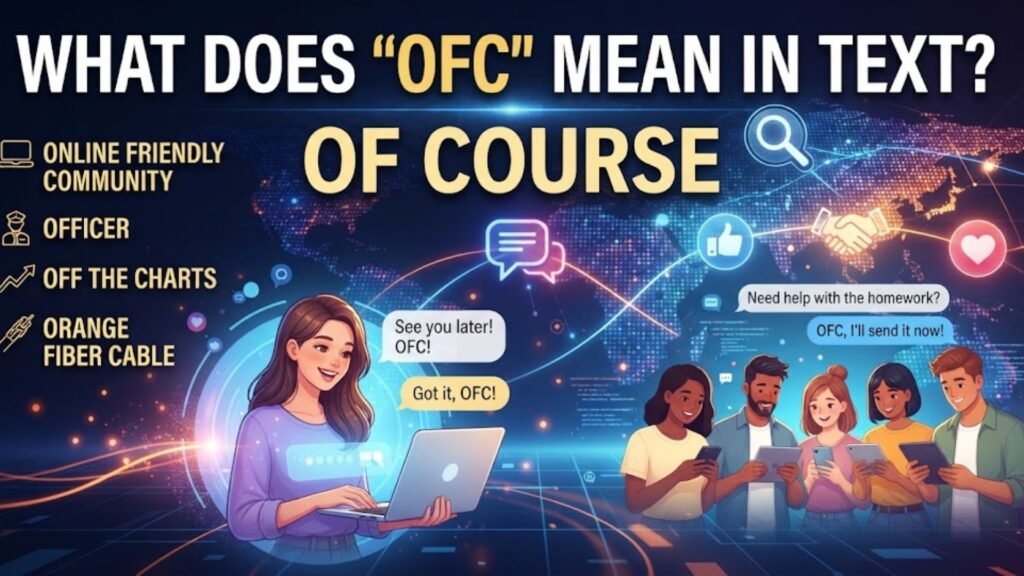
OFC is short for “of course.” That’s the simple answer, and it covers most of what you’ll see in DMs, group chats, and comment sections.
But here’s the thing. Texting culture loves shortcuts, and ofc is one of the most common texting abbreviations out there. People use it because typing three extra words feels slow when you’re firing off quick replies all day.
The real meaning shifts depending on who sent it and where. A text from your best friend hits differently than one from your boss. That’s the part most guides skip, and it’s the part that actually matters.
Think about how often you type a full sentence versus grabbing a shortcut. Texting abbreviations exist because conversations move fast now, and nobody wants to type out three words when three letters do the same job. That’s not laziness, it’s just how modern communication works.
By the end of this guide, you’ll know exactly when “ofc” means a genuine yes, when it’s just filler, and when it might carry a little attitude underneath. No more staring at your screen wondering what your friend really meant.
The Most Common Meanings of “ofc”
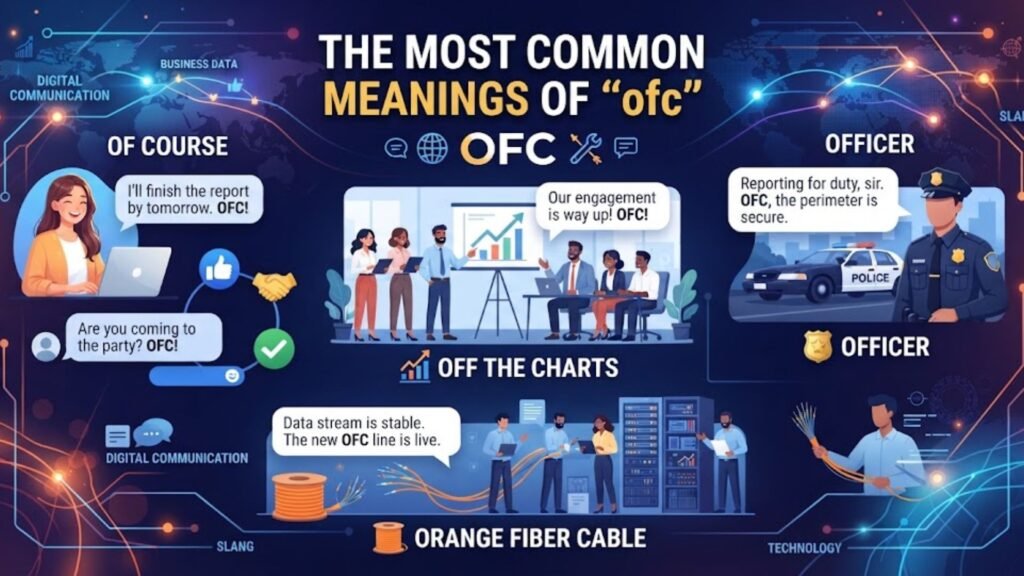
Ofc isn’t a one-trick word. It bends based on tone, context, and the relationship between the two people texting. Let’s break down the four main ways people use it.
1. Of course (normal agreement)
This is the baseline use, and it’s the most common one you’ll run into. Someone asks a favor, you reply “ofc,” and that’s your casual agreement wrapped up in three letters.
Think of it like a verbal nod. No drama, no hidden meaning, just a quick yes. This version shows up constantly in friendly chats and everyday texting.
2. Obvious yes (strong confirmation)
Sometimes ofc carries more punch than a regular yes. It signals an obvious truth or an obvious answer, the kind where the question almost didn’t need asking.
If someone texts “are you coming to the party?” and you reply “ofc,” you’re saying it was never in question. This is strong confirmation, not just polite agreement.
3. Casual support or approval
Ofc also works as a stamp of approval. Your friend shares an idea, and you text back “ofc, that’s a great plan.” Here it’s less about answering a question and more about backing someone up.
This use pops up a lot in group chats and on Instagram comments. It’s warm, it’s supportive, and it keeps the conversation moving without dragging things out.
4. Sarcastic tone (less common)
Now here’s where things get tricky. Ofc can carry a sarcastic tone, especially when paired with an eye-roll emoji or used after something frustrating happens.
“Ofc my flight got delayed” doesn’t mean the person is happy about it. This version relies heavily on context, and mixing it up with genuine agreement is one of the biggest sources of digital miscommunication.
How “ofc” Is Used in Real Conversations
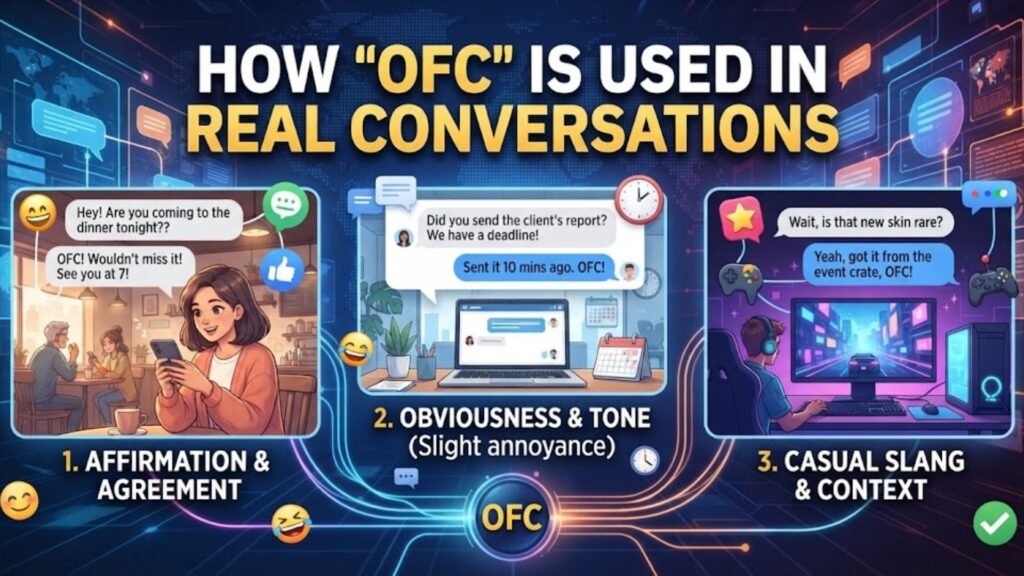
The meaning of ofc changes shape depending on the platform. What feels normal on Snapchat might feel odd in an email. Let’s walk through where this word actually lives.
Friends & Casual Texting
Among friends, ofc is practically automatic. It’s the texting equivalent of nodding along while someone talks, quick, easy, and never overthought.
You’ll see it answering plans, confirming favors, or just backing up whatever your friend just said. In this space, it almost always leans positive.
Instagram & Snapchat
On Instagram DMs and Snapchat messages, ofc shows up in comments, story replies, and quick back-and-forths. It fits the fast pace of social media chats perfectly.
People here aren’t writing essays. They’re reacting in real time, and ofc slides right into that rhythm without slowing anyone down.
Dating Apps
On Tinder, Bumble, and other dating apps, ofc often carries a flirty undertone. “Ofc I’d love to grab coffee” reads warmer than a plain yes.
It softens the reply and adds a bit of enthusiasm. In romantic conversations, small word choices like this actually do a lot of heavy lifting.
Gaming & Online Communities
In gaming communities, ofc keeps things moving during fast game coordination. “Ofc, join the match” is quicker to type than a full sentence when every second counts.
Gamers value speed over formality, so shortcuts like this are baked into how online players talk to each other mid-match.
Voice chat gets loud, and typing fast matters when a match is already in progress. Multiplayer games run on split-second decisions, so a short “ofc” confirming a strategy beats typing out a full paragraph while your team waits.
Work or Professional Chat
This is where ofc gets shaky. In work chats, it can come across as too casual, even a little blunt, depending on your workplace culture.
Some teams are relaxed enough that it’s fine in Slack messages. Others expect formal tone, and dropping ofc into an email might raise eyebrows.
Is “ofc” Rude, Flirty, or Offensive?
Short answer? It depends entirely on context. Ofc isn’t rude by default, but it can land that way if the timing or tone is off.
When it feels positive:
- Answering a simple favor with warmth
- Backing up a friend’s idea
- Confirming plans enthusiastically
When it feels negative:
- Replying to a serious question with a dismissive “ofc”
- Using it after someone shares something vulnerable
- Pairing it with a curt, one-word reply and nothing else
Flirty use:
Paired with emojis or a playful follow-up, ofc can definitely read as flirty texting. It’s short, confident, and leaves a little room for the other person to smile.
Psychological angle:
There’s a real communication psychology piece here too. Short replies often trigger overthinking messages, especially when there’s already emotional distance in the relationship. The word itself isn’t the problem, it’s the gap in tone that gets filled with worry.
How to Respond When Someone Says “ofc”
Not sure how to reply? Tone matching usually solves the problem. Match their energy, and you’re safe.
Casual replies
- “Cool”
- “Nice, thanks”
- “Got it”
Funny replies
- “As expected 😂”
- “I knew it”
- “Bet”
Neutral replies
- “Okay”
- “Noted”
- “Perfect”
Professional replies
- “Thanks for confirming”
- “I appreciate it”
- “Noted, thank you”
Common Misunderstandings About “ofc”
Most confusion around ofc comes from missing context, not the word itself. Here are the mix-ups people run into most.
1. Thinking it is rude
A quick “ofc” can feel cold in text, but that’s usually just texting efficiency, not attitude. Written words lose tone that voice naturally carries.
2. Confusing it with anger
Confusing short replies with anger is one of the most common communication mistakes out there. A busy person typing fast isn’t the same as an upset person typing short.
3. Assuming sarcasm always
Not every “ofc” drips with sarcasm. Reading sarcasm into a genuinely warm reply says more about tone confusion than the actual message.
4. Overthinking tone
Sometimes the simplest explanation is right. Someone said “ofc” because the answer was, well, obvious. No deeper meaning required.
Similar Slang Terms You Should Know
Ofc doesn’t travel alone. It’s part of a bigger family of internet abbreviations that show up constantly across chat slang and social media slang.
| Slang | Full Meaning |
| FR | For Real |
| IDK | I Don’t Know |
| IG | I Guess |
| TBH | To Be Honest |
| IMO | In My Opinion |
| BRB | Be Right Back |
| RN | Right Now |
| NP | No Problem |
| FS | For Sure |
| Bet | Agreed / Okay |
Knowing these helps you read modern texting the way it’s meant to be read, without pausing every five seconds to decode something.
When You Should Avoid Using “ofc”
Context matters more than the word itself, and there are moments where ofc just doesn’t fit.
Professional settings
Stick to formal language in reports, client emails, and business communication. Save the shortcuts for Slack messages with coworkers you already text casually.
Cross-cultural chats
In cross-cultural communication, slang doesn’t always translate. What reads as friendly in one culture might come across as dismissive in another, so plain English keeps things clear.
Sensitive situations
Someone opening up about something serious deserves more than a one-word reply. Skip ofc during emotional conversations and lean into full sentences instead.
What Makes “ofc” So Popular in 2026
Ofc isn’t fading anytime soon, and there’s a reason for that. Fast communication is the default now, whether you’re texting a friend or replying to a story on Instagram.
Gen Z slang and Gen Alpha slang both lean heavily on shortcuts like this. It’s less about laziness and more about matching the speed of how people actually talk today.
Platforms reward brevity too. A quick “ofc” fits neatly into a comment box or a story reply without breaking the flow of a fast-moving feed.
OFC vs Full Sentences: When Each One Works Better
Sometimes typing the full phrase actually says more. “Of course I’ll help you” carries warmth that “ofc” can’t always match on its own.
Use full sentences when the moment calls for reassurance, like comforting a friend or apologizing. Save ofc for lighter exchanges where speed matters more than depth.
Think of it as a tool, not a rule. Pick whichever version fits the emotional weight of the conversation you’re actually having.
FAQs
What does “ofc” mean in texting?
It stands for “of course” and usually signals agreement, confirmation, or approval depending on context.
Is “ofc” rude in chat?
Not inherently. It can feel blunt in serious conversations, but among friends it’s just a fast, casual reply.
Is “ofc” formal or informal?
It’s strictly informal writing. Avoid it in professional documents or client-facing messages.
Can “ofc” be flirty?
Yes, especially on dating apps when paired with warm follow-up messages or playful emojis.
Why do people use “ofc” instead of “of course”?
Speed. Instant messaging favors short, quick replies over full sentences.
What is the full form of ofc?
“Of course” is the full form, plain and simple.
Should I use “ofc” in work chats?
Only if your workplace culture is already casual. Otherwise, stick to full sentences for workplace etiquette.
Final Thoughts
Ofc is a small word carrying a lot of flexibility. It can agree, confirm, support, or tease, all depending on who’s typing and where.Read the room before you read too much into three letters.
Most of the time, someone typing “ofc” just means exactly what it says, nothing more hidden underneath.Got a text with “ofc” that left you second-guessing? Drop it in the comments and let’s figure out the tone together.