
You saw “ISTG” in a text and paused for a second.Was it anger? A joke? Something serious?Here’s the short answer. ISTG stands for “I Swear To God.” People use it to add strong emphasis to whatever they’re saying, whether that’s a promise, a complaint, or plain old excitement. It’s one of those texting abbreviations that shows up everywhere once you start noticing it, from group chats to Instagram comments to a message from your gym buddy who just saw something wild happen at the mall.
This guide breaks down what ISTG actually means, how people use it across different platforms, when it can come off wrong, and what to say back when someone drops it on you. No jargon, no guesswork. Just the real picture.
What Does “ISTG Meaning in Text” Mean in Text?
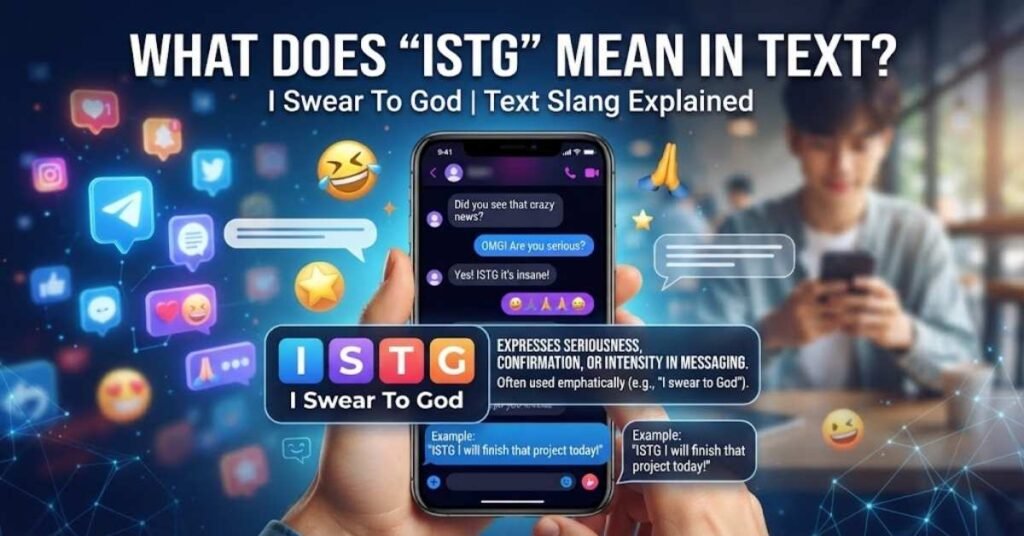
At its core, ISTG is short for “I Swear To God.” It’s a way to tell someone you’re being completely serious, or that a story you’re telling is true, no exaggeration involved.
Think of it as digital body language. When you talk to someone face to face, you might raise your eyebrows or lean in to show you mean business. Texting doesn’t give you that option, so people lean on chat abbreviations like ISTG to carry that same weight. It’s a stand in for tone, since flat text can’t always show how serious you are.
You’ll also see it spelled out in lowercase, all caps, or mixed with emojis. The meaning stays the same no matter how it’s typed. It’s less about religion and more about honesty and getting your point across fast.
The Most Common Meanings of “ISTG”
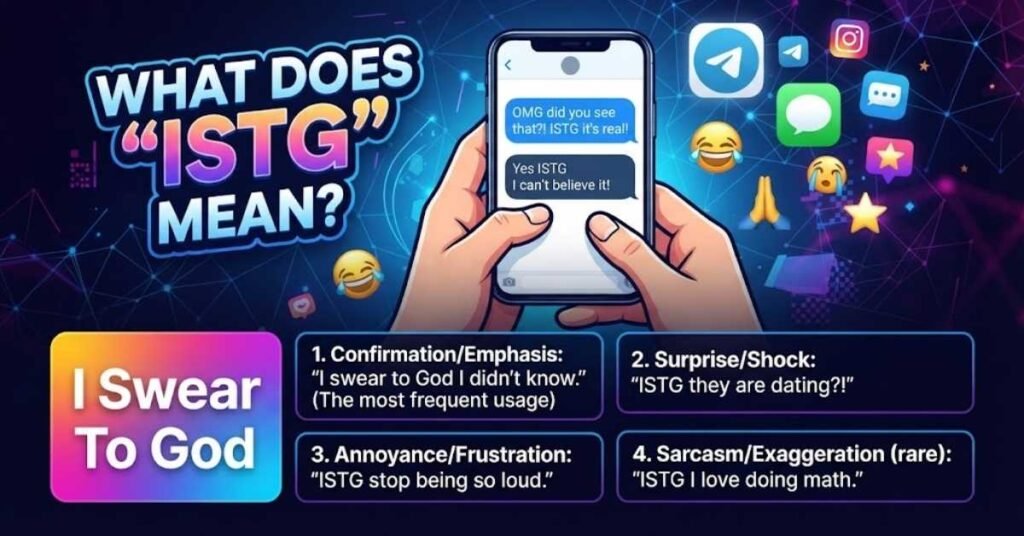
ISTG isn’t a one trick phrase. Depending on where it lands in a sentence, it can mean a handful of different things. Here’s how the core meaning shifts based on context.
I Swear To God (Most Common Meaning)
This is the classic use. Someone says “ISTG I didn’t eat your leftovers” and they mean it as a genuine denial, a promise wrapped in three letters.
It works like a verbal pinky swear. You’re not literally invoking anything religious most of the time. You’re just stacking extra sincerity onto a claim you want believed.
Emphasizing a Strong Feeling
Sometimes ISTG has nothing to do with proving a point. It’s just there to boost the emotional volume of a sentence. “ISTG this song is stuck in my head” isn’t a swear at all, it’s pure emotional expression.
People drop it in the middle of excitement, love, hunger, exhaustion, basically any feeling that needs an extra push. It’s the texting version of underlining a word for effect.
Showing Frustration
ISTG shows up a lot when patience runs thin. “ISTG if this bus is late one more time” carries real annoyance, even without an exclamation point.
It signals that someone is close to their limit, but usually in a way that’s more venting than actual rage. Friends use it this way constantly, especially in group chats where everyone’s already annoyed about the same thing.
Showing Surprise or Disbelief
Ever gotten a text that made you say “wait, what?” out loud? ISTG covers that too. “ISTG I just saw my old teacher at the gas station” is shock talking, not honesty talking.
This use leans into surprise and disbelief, the kind of reaction you’d normally show with wide eyes and a dropped jaw. Texting doesn’t have a face for that, so ISTG fills the gap.
Stressing Honesty
Finally, ISTG gets used as a straight up honesty booster. No anger, no shock, just someone making sure their word carries weight. “ISTG I’ll pay you back Friday” is a small promise dressed up with trust built in.
This version pairs well with plans, apologies, or anything where someone wants to be taken at their word.
How “ISTG” Is Used in Real Conversations
Context changes everything with slang. The same three letters can feel completely different depending on where they show up.
Friends & Casual Texting
Among friends, ISTG is practically punctuation. It slides into casual chats without a second thought, whether someone’s confirming plans or reacting to gossip. “ISTG she said that to my face” reads as totally normal here, almost expected.
Group chats especially lean on it. It keeps the tone light while still landing the point.
Instagram & Snapchat
On Instagram and Snapchat, ISTG often shows up in captions, comments, or replies to a story. Someone might comment “ISTG this is the funniest thing I’ve seen today” under a video, adding personality to a quick reaction.
It also pops up in direct messages (DMs), especially when reacting to something surprising a friend just shared. The tone here stays playful more often than serious.
Dating Apps
On dating apps, ISTG can add a flirty edge. “ISTG you’re the funniest person I’ve matched with” reads as a compliment with a wink built in.
It’s rarely used aggressively in this setting. Instead, it softens a bold statement, making it feel more genuine and less like a rehearsed line.
Gaming & Online Communities
Gamers use ISTG constantly, especially mid match. “ISTG if you don’t stop camping” is half joke, half genuine frustration, the kind of thing said in the heat of a round and forgotten two minutes later.
In gaming platforms and voice chats, it often gets typed out during intense moments where players want to express urgency fast without typing a full sentence.
Work or Professional Chat
This is where ISTG gets tricky. Workplace communication usually calls for more formal language, so tossing ISTG into a work Slack message can land oddly, even if it’s meant harmlessly.
It’s not that it’s offensive. It just clashes with the tone most teams expect, especially with people outside your closest work friends.
Is “ISTG” Rude, Flirty, or Offensive?
Slang doesn’t come with a built in tone meter, so this question comes up a lot. The truth is, ISTG can swing several directions depending on delivery.
When It Feels Positive
Paired with excitement or a compliment, ISTG feels warm and genuine. “ISTG that meal was amazing” carries pure enthusiasm, nothing negative attached.
When It Feels Neutral
Plenty of the time, ISTG is just filler for emphasis. “ISTG I’m on my way” doesn’t carry heavy emotion either direction. It’s simply a neutral tone nudge, letting the other person know you’re serious about the timing.
When It Feels Negative
Context can flip things fast. “ISTG I’m so done with this” clearly leans into frustration or annoyance, especially paired with a longer rant.
Can It Be Flirty?
Yes, and it happens often. When someone uses ISTG to react to a compliment or a joke from a crush, it usually softens the moment. “ISTG you’re too much” reads as playful teasing rather than anything serious.
Can It Be Offensive?
On its own, ISTG isn’t offensive. But like any phrase, it can feel harsh if attached to something mean spirited or if someone is already upset. The abbreviation itself is neutral. The words around it decide the tone.
How to Respond When Someone Says “ISTG”
Not sure how to reply when ISTG pops up in your inbox? Here’s a quick breakdown by tone.
Casual Replies
- “haha okay I believe you”
- “for real??”
- “lol same honestly”
Funny Replies
- “ISTG you say that every time”
- “prove it 😂”
- “sure sure”
Neutral Replies
- “got it, thanks for letting me know”
- “understood”
- “okay, appreciate you clarifying”
Professional Replies If a coworker or client uses it, keep your reply simple and steady. “Thanks for the update” or “Noted, appreciate the clarification” works fine without matching their casual tone.
Common Misunderstandings About “ISTG”
Slang gets misread more often than people realize, and ISTG is no exception. Here are the mix ups that trip people up most.
Assuming It Always Means Anger
Plenty of people assume ISTG only shows up when someone’s mad. In reality, it’s just as common in excited or affectionate messages.
Thinking It’s Always Religious
Despite spelling out “God,” most uses have nothing to do with religion. It’s closer to a filler phrase for emphasis than an actual reference to belief.
Misreading the Tone
Text lacks facial expressions, so ISTG can be misjudged easily. A message meant as a joke might read as serious to someone unfamiliar with the sender’s usual style.
Confusing It With Similar Abbreviations
New texters sometimes mix ISTG up with FR (For Real) or NGL (Not Gonna Lie). They’re cousins in meaning but not identical twins. ISTG leans harder into sincerity and swearing, while FR and NGL are softer confirmations.
Assuming Older Users Don’t Understand It
It’s easy to assume slang skips over certain age groups, but plenty of younger internet users taught their parents this one during a random family group chat mishap. Understanding isn’t as generational as people think anymore.
Similar Slang Terms You Should Know
ISTG doesn’t travel alone. It’s part of a wider family of related slang abbreviations that show up in the same conversations.
- TBH (To Be Honest): softer honesty, less intense than ISTG
- NGL (Not Gonna Lie): admitting something reluctantly
- OMG (Oh My God): shock or excitement, similar energy to ISTG’s surprise use
- IKR (I Know, Right?): agreement, often paired after an ISTG statement
- FR (For Real): confirmation, close cousin to ISTG
- IDC (I Don’t Care): dismissive, opposite energy from ISTG’s sincerity
- IMO (In My Opinion): personal take, less emphatic
- SMH (Shaking My Head): disapproval or disbelief
- TBF (To Be Fair): balancing a statement
- BRB (Be Right Back): unrelated in meaning but common in the same chats
- IDK (I Don’t Know): uncertainty
- LMK (Let Me Know): a request for a reply
Knowing these helps with overall slang awareness, especially if you’re navigating group chats with a mix of ages and texting habits.
When You Should Avoid Using “ISTG”
Slang has its place, and knowing where it doesn’t belong matters just as much as knowing how to use it.
Professional Settings
In professional communication, ISTG can read as unpolished, even if your intent is harmless. Stick to plain language in emails or formal Slack channels.
Cross-Cultural Chats
Not everyone grew up around this phrase. In cross-cultural communication, ISTG might confuse someone more than it clarifies, especially if English isn’t their first language.
Sensitive Situations
During a serious conversation, like a family emergency or a hard talk with someone upset, ISTG can feel out of place. It’s built for casual emphasis, not weighty moments.
Academic Writing
Academic writing calls for formal tone throughout. Slang like ISTG has no home in essays, reports, or research papers, no matter how tempting it is to add personality.
Conversations With People Unfamiliar With Slang
If you’re texting someone who clearly doesn’t use much online slang, dropping ISTG might just create confusion. A simple “I promise” or “for real” gets the same point across without the guessing game.
The Bigger Picture: Why Slang Like ISTG Keeps Growing
Digital communication has reshaped how people express emotional intensity without saying a full sentence. Abbreviations like ISTG exist because typing takes longer than talking, and shortcuts help conversations move at the speed people actually think.
This kind of language evolution isn’t new either. Every generation has created its own shortcuts, from old school telegrams trimming words to save money, to today’s texters trimming words to save time. ISTG is just the latest chapter in that story, one that keeps expanding as online interaction becomes the main way people talk day to day.
Final Thoughts
ISTG is a small phrase carrying a lot of range. It can promise, complain, celebrate, or flirt, all depending on the words wrapped around it. Once you understand the pattern, reading tone in texts gets a whole lot easier.
The real skill isn’t memorizing what ISTG means. It’s noticing the situation it shows up in, since that context always tells the fuller story. Keep that awareness handy, and slang like this stops feeling confusing and starts feeling like second nature.
FAQs
What does ISTG stand for in texting?
ISTG stands for “I Swear To God,” used to add emphasis or show sincerity in a message.
What does ISTG mean on Snapchat?
Same meaning as everywhere else, though on Snapchat it often appears in captions or quick reactions to stories.
What does ISTG mean on Instagram?
It usually shows up in comments or DMs to react strongly to something funny, shocking, or exciting.
Can ISTG be used in dating messages?
Yes, it often adds a playful or flirty tone when paired with compliments or teasing.
Should I use ISTG at work?
It’s best avoided in formal settings. Save it for casual chats with coworkers you’re close with, if at all.