
You’ve seen it a hundred times in a group chat. Someone types “IMO this movie was mid” and moves on like it’s nothing. But if you’re new to texting slang, or you just want to use it right, that little three letter combo can feel oddly confusing.
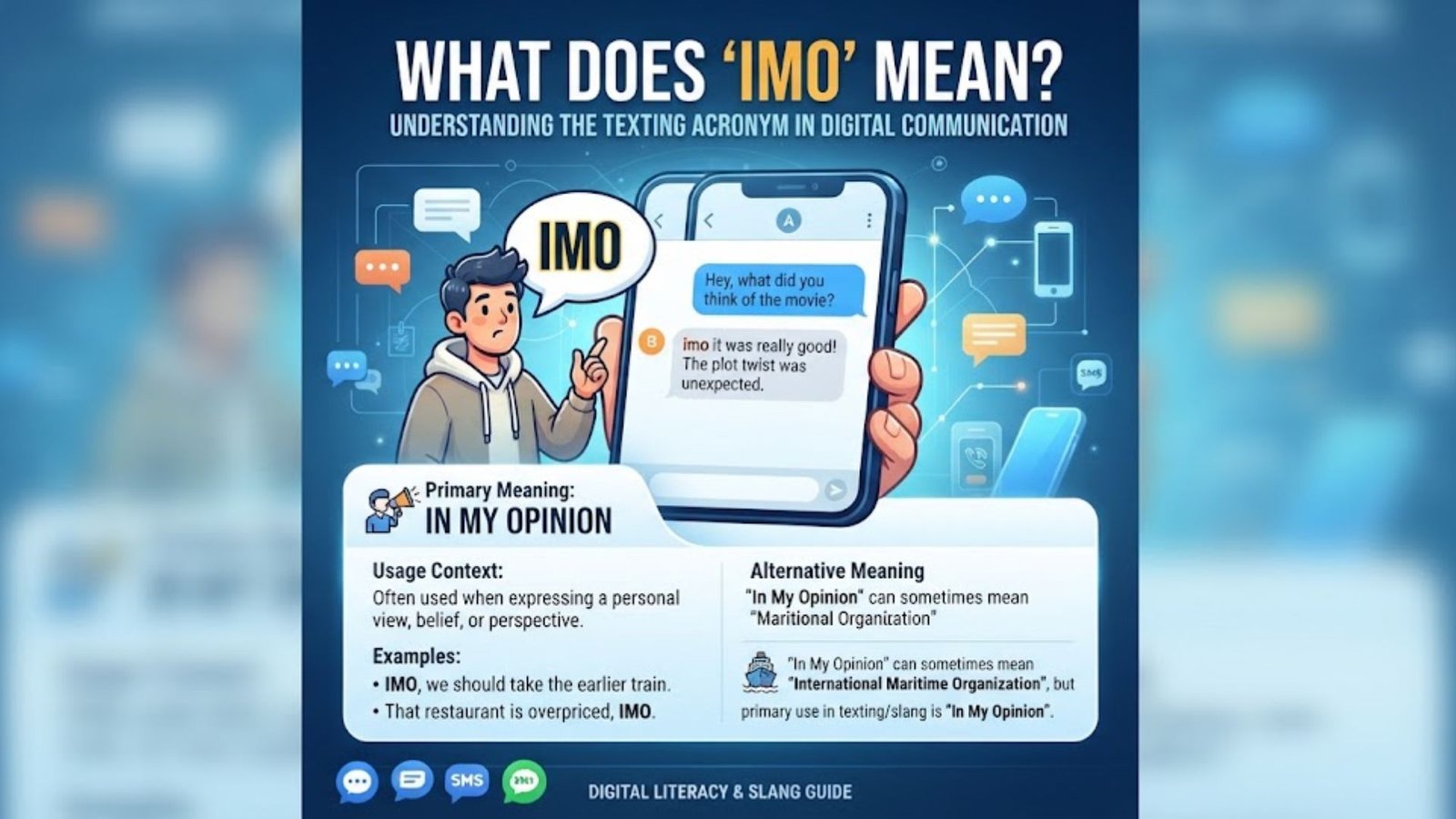
Here’s the short answer. IMO stands for “In My Opinion.” It’s how people flag that what they’re saying is a personal take, not a fact. Simple as that. But there’s a lot more nuance to how, when, and where you should actually use it, so let’s dig in.
What Does “IMO Meaning in Text” Mean?
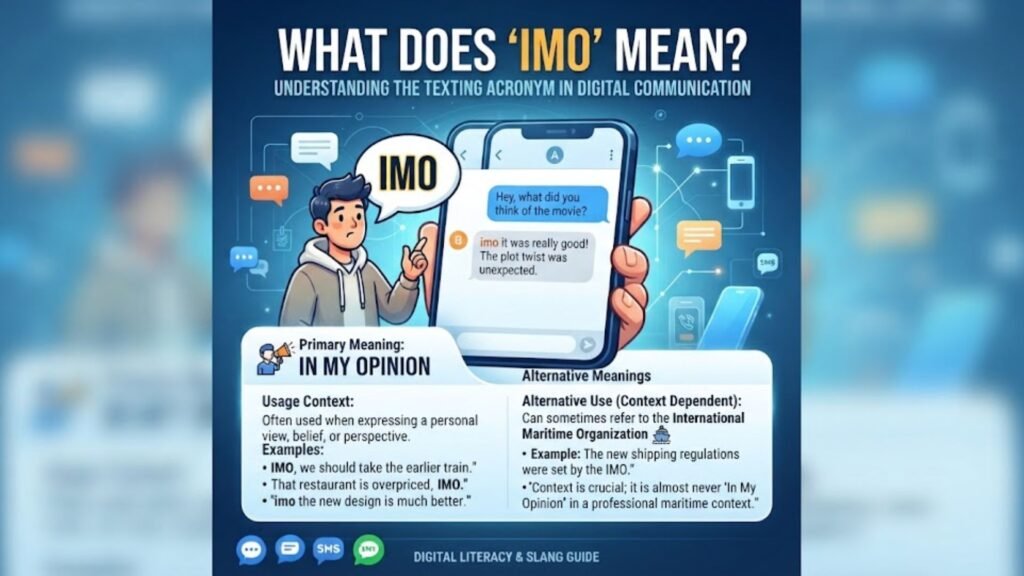
At its core, IMO is one of the most common pieces of internet abbreviation you’ll run into. It signals personal opinion before someone shares their viewpoint on something. Think of it as a little verbal flag that says “hey, this is just how I see it.”
People use this texting abbreviation because typing out “in my opinion” every single time gets tiring. Digital conversation moves fast, and online slang like this helps keep things quick without losing meaning. It’s become such a normal part of text messages that most people don’t even think twice when they see it.
What makes IMO interesting is how flexible it is. It can soften a harsh statement, add casual honesty to a comment, or simply let someone share a personal perspective without sounding like they’re stating law. That flexibility is exactly why it has stuck around in modern slang for so long.
The Most Common Meanings of “IMO”
Most of the time, IMO carries one straightforward meaning, but the way people apply it can shift slightly depending on the situation. Here’s a breakdown of how this short form actually gets used in real life.
In My Opinion
This is the classic, most literal use. Someone wants to share a subjective judgment on a topic, whether it’s a movie, a meal, or a hot take about pineapple on pizza. It’s their individual perspective, nothing more, nothing less.
Personal Recommendation
Sometimes IMO shows up right before someone suggests something. “IMO, you should try the spicy version” is a personal recommendation dressed up in casual language. It softens the suggestion so it doesn’t feel like a demand.
Friendly Disagreement
IMO is also a great tool for pushing back gently. Instead of saying “you’re wrong,” someone might say “IMO, that’s not quite right.” It keeps the disagreement friendly instead of confrontational, which matters a lot in group chats.
Opinion-Based Review
You’ll see this a lot in online review culture. “IMO, this phone isn’t worth the price” is a fast way to share a product recommendation without sounding like an official verdict. It tells the reader that it’s just one person’s take, not gospel.
How “IMO” Is Used in Real Conversations
Context changes everything with slang, and IMO is no exception. The tone shifts depending on where the conversation is happening and who’s involved.
Friends & Casual Texting
Among friends, IMO is about as casual as it gets. It shows up in group chats when someone’s weighing in on plans, drama, or which restaurant to pick for dinner. Nobody overthinks it here, it’s just a normal part of casual texting.
Instagram & Snapchat
On platforms like Instagram and Snapchat, IMO often pops up in comments or captions. Someone might comment “IMO this fit is fire” under a photo. It’s quick, it’s expressive, and it fits the fast pace of social media language.
Dating Apps
On dating apps, IMO can add a bit of personality to a conversation. Saying “IMO first dates should always involve coffee” gives the other person a small window into your personal preferences. It’s low pressure and often opens up more conversation.
Gaming & Online Communities
Inside gaming communities, IMO shows up constantly in debates about strategy, characters, or updates. “IMO this weapon needs a buff” is a common line you’ll see in gaming chats. It keeps heated gaming debates from turning into full blown arguments.
Work or Professional Chat
Even in workplace communication, IMO sneaks in sometimes, especially in informal team chats. Someone might type “IMO we should push the deadline” during a quick Slack exchange. It works fine casually, but it needs a bit more caution in more formal communication.
Is “IMO” Rude, Flirty, or Offensive?
This is where a lot of people get tripped up. IMO by itself isn’t rude or offensive, but tone and context can shape how it lands.
When It Feels Positive
When IMO is paired with praise or encouragement, it feels warm and supportive. “IMO you did an amazing job on that project” reads as a genuine compliment. The positive tone comes from the words around it, not the abbreviation itself.
When It Feels Neutral
Most of the time, IMO is completely neutral tone. It’s simply someone stating a preference, like “IMO tacos are better than burritos.” No drama, no hidden meaning, just a casual comment.
When It Feels Negative
Sometimes IMO gets attached to criticism, and that’s when things can feel sharper. “IMO that was a terrible idea” carries a negative tone, even though the phrase itself is still just expressing an opinion. The wording around it matters a lot here.
Can IMO Be Flirty?
Yes, actually. In a dating context, IMO can carry a bit of a flirty tone depending on what follows it. “IMO you’d look great across the table from me at dinner” is a soft, confident way to hint at interest. It’s subtle, but it works.
How to Respond When Someone Says “IMO”
Knowing how to reply keeps the conversation flowing naturally instead of feeling awkward.
Casual Replies
A simple “that’s fair” or “good point” works great for casual chats. These casual reply terms keep things light without forcing you to fully agree or disagree. They’re easy, low effort, and totally normal.
Funny Replies
If you want to add some humor, try something like “bold opinion, noted” or “the jury’s still out on that one.” These lines add personality while still acknowledging what the other person said.
Neutral Replies
Sometimes you just want to stay balanced. “I can see that” or “interesting take” lets you respond without picking a side. These work especially well when you’re not fully convinced either way.
Professional Replies
In more professional communication, it’s smart to respond with something a bit more measured, like “thanks for sharing your perspective” or “I’ll take that into consideration.” It keeps things respectful while still moving the conversation forward.
Common Misunderstandings About “IMO”
Even though IMO feels simple, plenty of people misuse or misunderstand it.
Assuming It Means a Fact
Some people mistakenly treat IMO statements as facts instead of opinion expression. Just because someone says “IMO the sequel was better” doesn’t mean it’s objectively true. It’s still just a personal take.
Thinking It Is Always Polite
IMO doesn’t automatically soften harsh words. If the sentence itself is rude, adding IMO in front of it won’t fix that. Tone and wording still matter more than the abbreviation.
Confusing It With IMHO
A lot of people mix up IMO and IMHO. While they’re similar, IMHO stands for “in my humble opinion,” and it usually signals a bit more modesty or hesitation before sharing a view.
Misreading Tone
Since text lacks facial expressions or voice cues, misreading tone is common. What feels like a joke to one person might come across as judgmental to another. Context truly does matter more than people realize.
Assuming Everyone Knows It
Not everyone is fluent in internet slang. Older audiences or people newer to texting culture might not immediately understand what IMO means, so a little communication clarity goes a long way.
Similar Slang Terms You Should Know
Since IMO rarely travels alone, it helps to know a few of its slang cousins.
IMHO means “in my humble opinion” and adds extra softness to a statement. TBH stands for “to be honest” and signals sincerity. FYI simply means “for your information,” used to share helpful details.
IMOA stands for “in my own opinion,” a slightly more emphatic version of IMO. IDC means “I don’t care,” while IDK means “I don’t know.” SMH expresses disbelief or disappointment, short for “shaking my head.”
NGL means “not gonna lie,” often used before an honest confession. IYKYK stands for “if you know, you know,” hinting at an inside reference. FWIW means “for what it’s worth,” softly introducing a thought. BRB means “be right back,” and TMI means “too much information,” usually said after someone overshares.
When You Should Avoid Using “IMO”
IMO works great casually, but there are situations where it’s better left out.
Professional Settings
In business emails or professional reports, it’s smarter to spell things out fully. Standard language and complete sentences feel more polished in these spaces.
Cross-Cultural Conversations
Not every culture uses the same slang, so cross-cultural conversations can get confusing if you lean too heavily on abbreviations. It’s safer to write things out clearly.
Sensitive Situations
During serious discussions involving grief, health issues, or major conflicts, casual slang like IMO can feel out of place. These moments call for respectful communication and careful wording.
Academic Writing
In essays or reports, academic writing expects formal writing, not internet shorthand. Save IMO for texting, not term papers.
Communication With Older Audiences
Some older audiences may not be familiar with newer digital language, so it helps to skip the abbreviation and just say what you mean.
How “IMO” Fits Into the Bigger Picture of Digital Language
Internet language keeps evolving every year, and IMO is a great example of how online communication adapts. As digital culture grows, so does the vocabulary people use to express themselves quickly. What started as a small piece of chat shorthand has now become part of everyday online language across nearly every platform.
By 2026, this kind of texting shorthand feels less like slang and more like a normal part of how people talk to each other online. It reflects how casual, fast-paced, and expressive digital conversations have become.
FAQs
What does IMO stand for in text messages? It stands for “in my opinion,” used to share a personal take casually.
Is IMO positive or negative? It’s neutral by default. The tone depends entirely on the words used around it.
What is the difference between IMO and IMHO? IMHO adds a touch of humility, while IMO is more direct and neutral.
Is IMO rude in texting? Not inherently. It only feels rude if paired with harsh or dismissive wording.
Can I use IMO at work? Yes, but mostly in casual chats. Stick to full sentences in formal emails or reports.
Is IMO commonly used on social media? Definitely. You’ll spot it constantly on Instagram, Snapchat, and TikTok.
Should I use IMO or write the full phrase? Use IMO casually, but write the full phrase in formal or sensitive conversations.
Final Thoughts
IMO might be a tiny abbreviation, but it carries a lot of everyday value. It helps people share opinions quickly, soften disagreements, and keep conversations casual and human. Once you understand how tone and context shape its meaning, using it becomes second nature.
So next time you see “IMO” pop up in a chat, you’ll know exactly what’s going on, and maybe you’ll use it a little more confidently yourself.Got a favorite way you use IMO? Drop it in the comments and let’s compare notes.