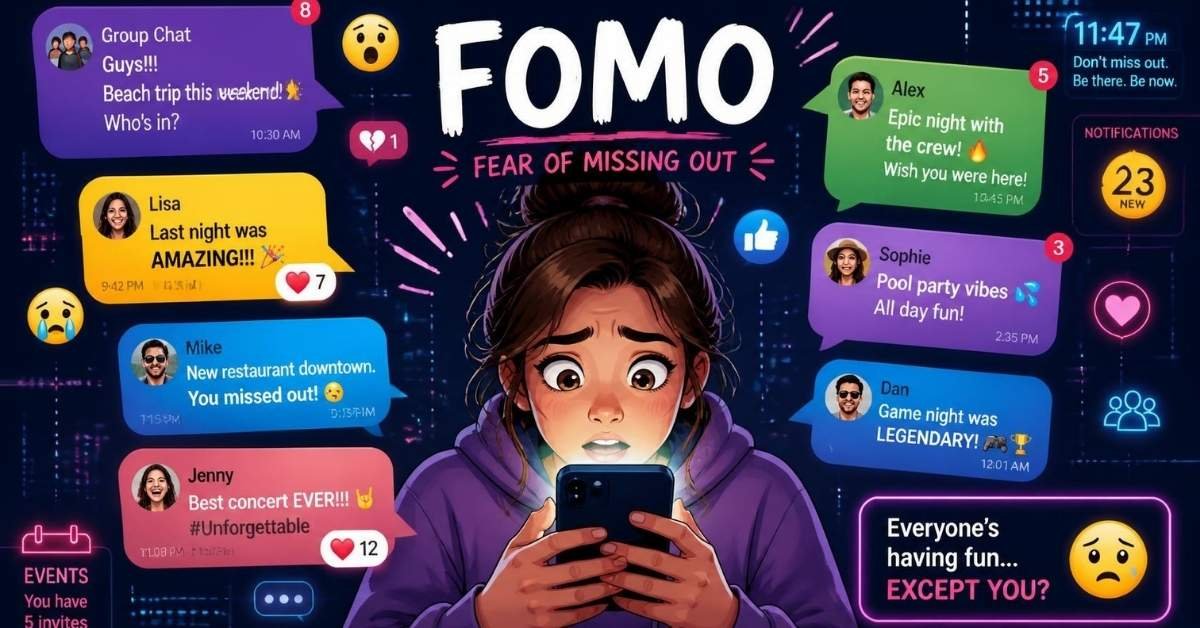

FOMO stands for fear of missing out. In a text, it means you feel left out, or you worry you’ll miss something fun, big, or useful. Someone types it when others are doing something exciting and they aren’t there.Ever got a “FOMO rn” message and froze? Maybe you wondered if it was a joke, a hint, or a real worry. You’re not the only one.
This guide explains the FOMO meaning in text in plain words. You’ll see how people use it in group chats, on Instagram, on dating apps, and at work. You’ll also get replies you can copy. We refreshed everything for 2026.
What Does “FOMO Meaning in Text” Mean?
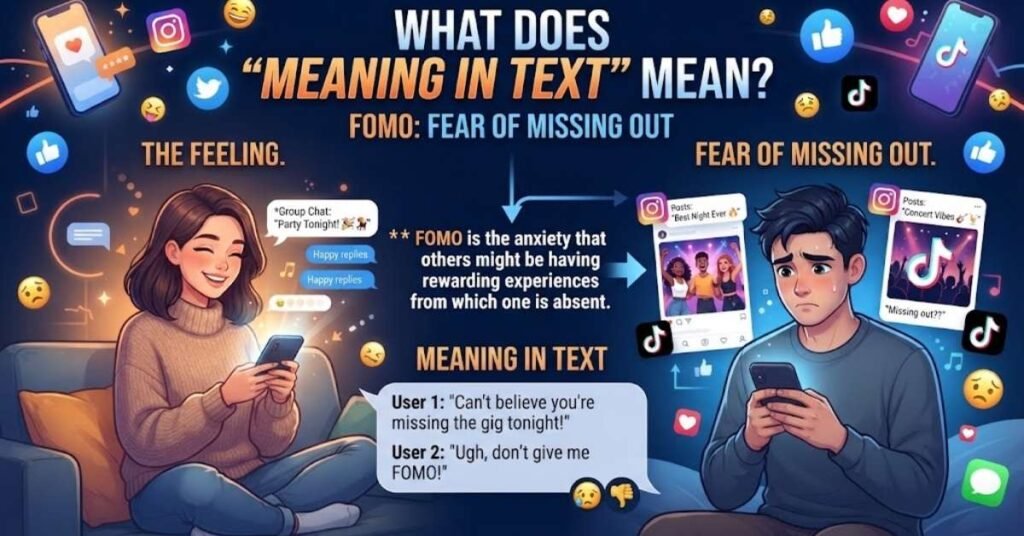
FOMO is a piece of internet slang that packs a whole feeling into four letters. It’s an acronym for “fear of missing out.” People use it when they see social experiences happening without them.
In a text, it’s short and casual. “Seeing your beach pics, total FOMO” says one thing: I wish I was there. Nobody needs a long explanation.
The tone usually stays light. Most people use it as a playful slang term, not a cry for help. Context tells you how serious it is.
The Most Common Meanings of “FOMO” in Text
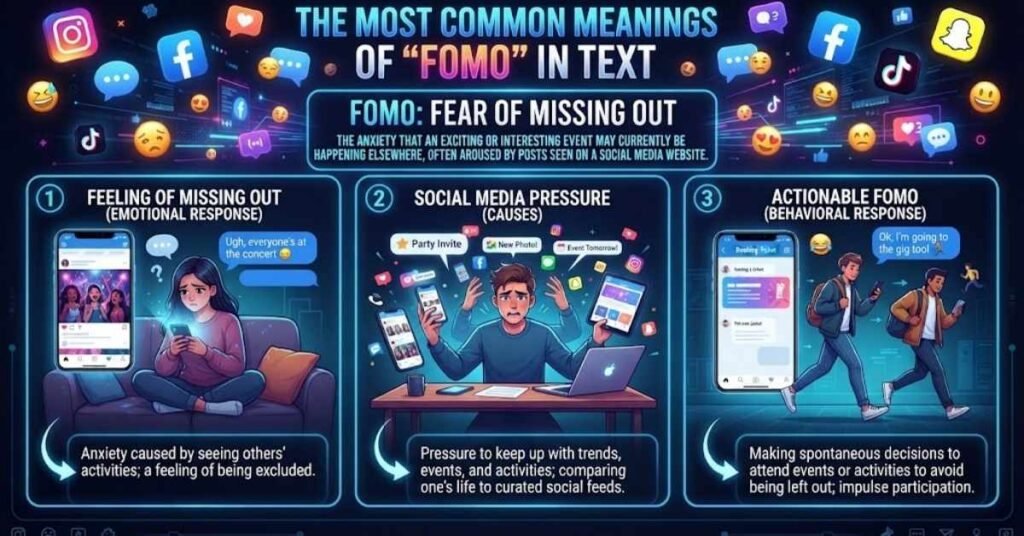
Not every FOMO message means the same thing. The word bends depending on who sends it and why. Here are the four meanings you’ll run into most.
1. Feeling Left Out of Fun Plans

This is the classic one. Your friends hit a concert and you stayed home with a cold. You text, “Watching your stories, major FOMO.”
It’s a way of saying, “I wish I’d been invited,” or “I wish I could’ve gone.” It carries a bit of regret and a bit of humor.
2. Wanting to Join Something Exciting
Sometimes FOMO points forward, not back. A friend says they’re heading to a weekend road trip. You reply, “Ugh, FOMO already, save me a seat.”
Here, it’s more excitement than sadness. You’re hinting that you’d love to tag along.
3. Social Media Pressure
Scroll long enough and everyone’s life looks better than yours. That’s social comparison at work. A post about someone’s new job or trip can trigger it fast.
People text, “This feed gives me FOMO,” to describe that tug. It shows how social media culture can quietly stir up jealousy and peer pressure.
4. Fear of Missing Opportunities
FOMO isn’t only about parties. It also covers life opportunities, like a hot stock, a job opening, or a limited course seat. “Everyone’s applying, I’ve got FOMO” is a real example.
This version feels heavier. It mixes anxiety about missing out with a push to act quickly.
How “FOMO” Is Used in Real Conversations
The word changes flavor from place to place. A casual texting thread treats it differently than a workplace communication channel. Let’s walk through each spot.
Friends & Casual Texting
With friends, FOMO is almost a reflex. Your best friend sends a photo from brunch. You answer, “FOMO! Next time, invite me.”
It keeps things warm. It says you care and you noticed.
Instagram & Snapchat
On Instagram captions and Snapchat stories, people use FOMO for both sides of the story. One person posts, “Sunset, no FOMO for me tonight.” Another comments, “Now I’ve got FOMO.”
You’ll see it under vacation pictures and party clips. It works as a tiny reaction and a trending term at the same time.
Dating Apps
On dating apps, FOMO shows up in two ways. Some people feel it about their matches, worrying a better option is one swipe away. Others use it in chat, like “Missed your hiking trip, FOMO!”
In online dating, that second use can be flirty. It signals interest without pushing hard.
Gaming & Online Communities
Gamers know FOMO well. Limited-time events, rare game skins, and seasonal gaming rewards all create a “now or never” feeling. Many studios build this into their game design on purpose.
In gaming chats, you’ll read, “Only three days left for that skin, FOMO is real.” It’s half joke, half warning.
Work or Professional Chat
Some tech teams use FOMO in informal workplace language. A teammate might write, “Skipped the demo, FOMO kicking in. Got notes?” It’s friendly and gets you the info you missed.
Still, it depends on your team’s culture. If your workplace is formal, keep it out of official messages.
Is “FOMO” Rude, Flirty, or Offensive?
Short answer: no, it isn’t offensive slang or rude slang. It’s a mild emotional reaction word. The only thing that changes is tone.
Think of it like a tone dial. The same word can sound sweet, sad, or teasing.
Positive Use
Positive FOMO shows enthusiasm. “Your new place looks amazing, FOMO!” is a compliment in disguise.
It tells the other person their life looks good. Most folks smile at that.
Negative Use
Negative use carries a sting. “Everyone went out and I wasn’t asked, FOMO” points to feeling left out in a real way.
Watch for clues like sad emojis or a long pause between messages. Those hint that the person isn’t joking.
Flirty Use
Flirty FOMO leans on curiosity. “Heard you had dinner with friends, FOMO. Next time I’m crashing” adds playful pressure.
It works well in dating conversations when both people already vibe. If you’re not sure, keep it lighter.
How to Respond When Someone Says “FOMO”
Your reply depends on the person and the setting. You don’t need a perfect line. You just need to match their energy.
Casual Replies
Keep it easy, like you would with a friend. Try “Next time you’re coming with us!” or “Wish you’d been there.”
These casual replies invite the person back in. That’s usually what they’re hoping for.
Funny Replies
Humor works when the mood is light. Try “Don’t worry, the food was mid anyway,” or “You dodged a very long queue.”
These funny replies ease the sting. Skip them if the person seems truly upset.
Neutral Replies
When you’re unsure, stay simple. “Yeah, it was fun. We’ll plan another one” does the job.
Neutral replies don’t push emotion either way. They keep the chat open.
Professional Replies
At work, keep it clear and calm. “Thanks for flagging. I’ll share the meeting updates by end of day” is plenty.
Professional replies fix the actual gap, which is missing info. You don’t need to mirror the slang.
Common Misunderstandings About “FOMO”
Slang travels fast, and meanings get twisted along the way. A few myths keep popping up. Let’s clear them.
1. Thinking It Means Something Technical
Some people see all caps and assume it’s a technical term. It isn’t a file format or a tool. It’s just texting slang for an emotion.
2. Confusing It With “OMO” or Other Slang
OMO isn’t a known standard term in everyday chat. FOMO is the one to remember. If you spot a lookalike, ask the sender what they meant.
Guessing can lead to awkward moments. A quick question saves the day.
3. Thinking It Always Means Serious Anxiety
FOMO can link to social anxiety, but it usually doesn’t. Most texts are lighthearted emotional expression.
Treat it as a signal, not a diagnosis. If someone seems down, check in kindly.
4. Believing It Only Applies to Social Media
Many people tie FOMO to feeds and stories. Yet it shows up in real-life conversations too. Think of a friend who skipped a wedding and hears all about it later.
The feeling is older than the internet. Only the label is new.
Similar Slang Terms You Should Know
FOMO doesn’t live alone. It sits in a big family of modern slang and Gen Z slang. Knowing its cousins helps you read online conversations with ease.
Here are the ones people mix with FOMO most often:
- JOMO (Joy of Missing Out): The calm opposite. You skip the plans and feel happy about it.
- YOLO (You Only Live Once): A push to say yes to everything.
- FYE: Slang that varies by community, so check context.
- Vibe and Mood: Words for a feeling or a relatable moment.
- Ghosted: When someone stops replying with no warning.
- Flex: Showing off, often on social media posts.
- Lit, Bet, No cap, Salty, Hits different: Common viral slang for excitement, agreement, honesty, bitterness, and standout moments.
Slang shifts quickly, so meanings can vary by group. When in doubt, look at how others in the chat use the word.
Why FOMO Hits Harder in 2026
Phones now push updates all day. Live stories, short videos, and shared maps make it easy to see where everyone is. That constant view feeds comparison culture.
Add online trends that change every week, and it’s tough to feel caught up. Something new always pops up. That’s why FOMO feels louder now than it did a few years ago.
The good news? You can manage it. Pick a few online communities you enjoy. Mute the rest, and plan social connection that happens offline.
When You Should Avoid Using “FOMO”
Slang is fun, but timing matters. A few settings call for another choice of words. Here’s where to pause.
Professional Settings
In formal communication like client emails or reports, skip it. Say, “I’d like to be included in future planning” instead.
It sounds clear and respectful. Nobody has to decode anything.
Cross-Cultural Chats
Not everyone speaks English slang the same way. A colleague in another country may not know FOMO at all. That’s normal.
In cross-cultural communication, spell it out: “I feel I missed out on the trip.” Simple words travel further.
Sensitive Situations
Skip it when someone’s dealing with loss, illness, or exclusion. Joking about missing out can land badly. Emotional awareness matters more than clever slang.
If a friend feels left out for real, listen first. Then offer a plan.
Final Thoughts
FOMO is a small word with a big job. It captures feeling left out, excitement, regret, and curiosity in one quick text. Once you know the context, it’s easy to read and easy to answer.Use it with friends, watch the tone, and go plain at work. That’s the whole trick.
Now it’s your turn. Which FOMO text have you received that made you laugh or cringe? Drop it in the comments, and share this guide with a friend who keeps asking what it means. We’ll keep updating it as slang evolves.
FAQs
What does FOMO mean in simple words?
It means “fear of missing out.” You feel bad or worried because others are doing something you’re not part of.
Is FOMO a real emotion?
Yes. It’s a genuine human emotion tied to belonging and social comparison. It’s usually mild, but it can feel strong for some people.
Is FOMO used only online?
No. People say it out loud too, in everyday speech and face to face. It just became famous through screens.
Can FOMO be positive?
It can. It sometimes pushes you to try new things, reconnect with friends, or chase a goal. It turns unhealthy only when it drains your mood.
What is the opposite of FOMO?
JOMO, or the joy of missing out. It’s the relief you feel when you skip plans and enjoy your own space.
Why do people get FOMO?
People want to belong, and social media culture makes comparison easy. Seeing friends’ highlights can spark peer pressure and doubt.
Is FOMO used in texting only?
No. It appears in text messages, captions, spoken chats, games, and even meetings. Texting slang simply spread it faster.