

Ever stared at a text for way too long, trying to figure out what your friend actually meant? You’re not alone. Meaning in text is simply the message hiding behind the words someone sends you, and it can shift depending on tone, timing, and who’s on the other end of the chat.A single line can be literal, playful, sarcastic, or loaded with hidden meaning, and reading it wrong is way too easy. This guide breaks down every layer of text meaning so you stop second guessing your chat messages and start replying with confidence.
Whether you’re decoding a one word reply from a crush or trying to figure out if your coworker is annoyed, the same rules apply. Words on a screen carry less information than a real conversation, so your brain fills in the blanks using context, timing, and past experience with that person.
What Does “meaning in text” Mean in Text?
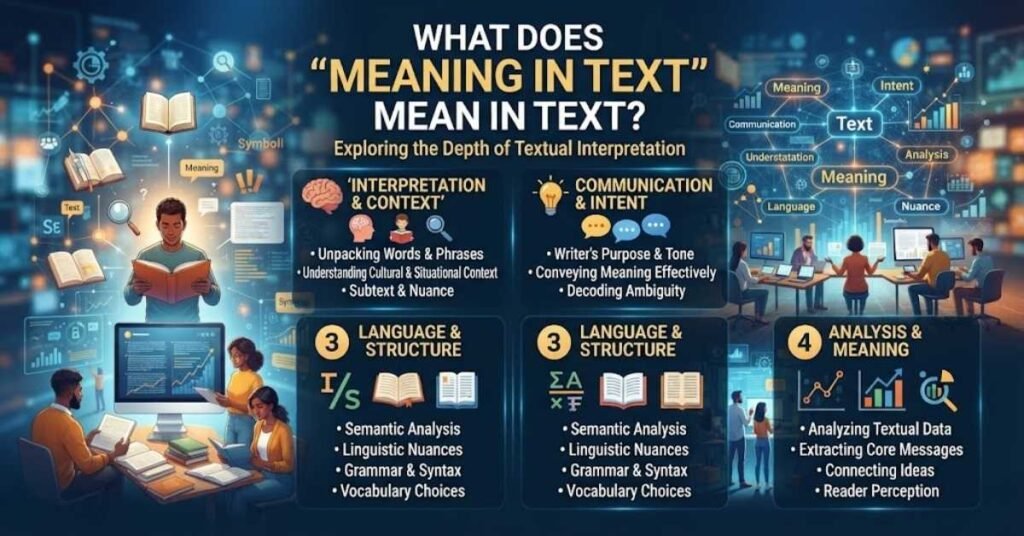
At its core, meaning in text refers to the true message behind a written line, not just the dictionary definition of the words. It’s the gap between what someone typed and what they actually wanted you to feel or understand.
Think of it like this. Reading a text is nothing like hearing someone speak. You lose their voice, their facial expression, and the little pauses that usually tell you if they’re joking or serious.
That’s why the same three words can land completely differently depending on context. A quick “sure, whatever” from your best friend probably means nothing. The same line from someone you’re arguing with? That’s a different story entirely.
The Most Common Meanings of “meaning in text”
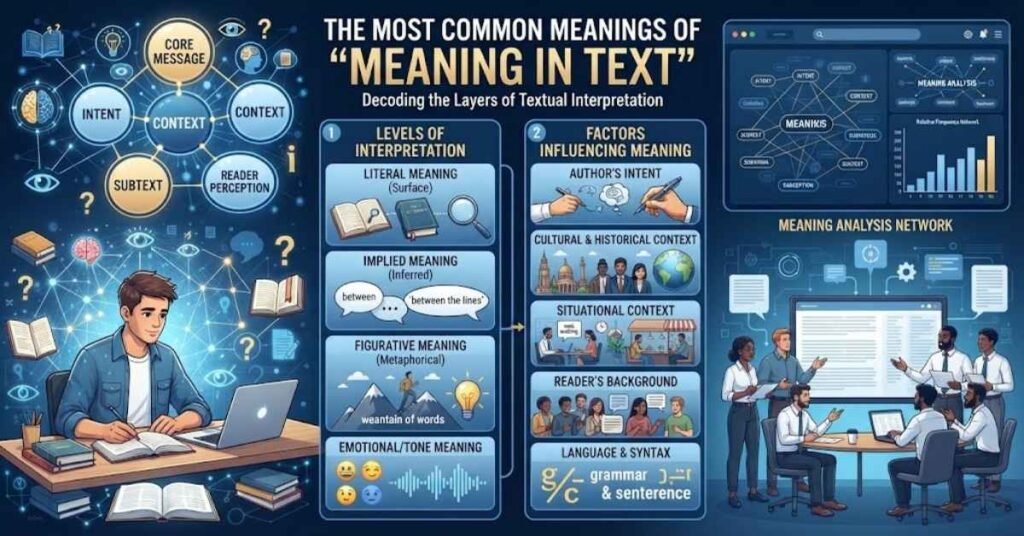
Not every text carries the same kind of weight. Most messages fall into one of four buckets, and knowing which one you’re dealing with saves you from a lot of confusion.
Here’s a quick breakdown of how these categories usually show up in real conversations.
1. Literal Meaning
This is the straightforward stuff. The literal meaning of a text is exactly what the words say, nothing more hiding underneath.
If someone texts “I’m at the store, need anything?” they mean exactly that. No hidden meaning, no reading between the lines required here.
2. Emotional Meaning
Emotional meaning is where feelings sneak into the words themselves. A text loaded with short replies or extra punctuation often says more about someone’s mood than the actual sentence does.
For example, “fine.” with a period hits very differently than “fine!” with an exclamation point. Same word, totally different emotional tone.
3. Slang Meaning
Slang meaning covers all the internet shorthand that doesn’t match a dictionary definition. Words like lit, sus, or bet carry a completely different sense once they hit a group chat.
This is where Gen Z texting and internet slang really shape modern conversations, since these terms evolve faster than any dictionary can track.
4. Hidden or Implied Meaning
Implied meaning is the trickiest one. It’s the message someone wants you to pick up without spelling it out directly.
A delayed reply, a one word answer, or a random “k” can all carry hidden messages that say far more than the actual text on your screen.
How “meaning in text” Is Used in Real Conversations
The same phrase can mean five different things depending on where it shows up. Let’s walk through the platforms and settings where text meaning shifts the most.
Friends & Casual Texting
Between close friends, casual texting runs on shared history and inside jokes. A blunt “no” from your best friend usually isn’t rude, it’s just how you two talk.
Casual replies lean heavily on tone you’ve built over years of friendship, so outsiders often misread them completely.
Instagram & Snapchat
On Instagram and Snapchat, timing and streaks add a whole new layer to social media messages. A quick reply might just mean someone’s bored, not that they’re obsessed with you.
Emojis do a lot of heavy lifting here too, often changing a plain sentence into something flirty or sarcastic in half a second.
Dating Apps
Dating conversations are practically built on implied meaning. A “haha yeah maybe” after asking someone out is almost never a real maybe.
Flirty meaning in this space often hides behind teasing, delayed responses, or playful deflection instead of a straight answer.
Gaming & Online Communities
Gaming slang moves fast and skips the fluff completely. Terms like GG or noob are functional, not personal, even if they sound blunt to a newcomer.
In online gaming, quick and clipped messages are just efficient communication, not attitude.
Work or Professional Chat
Professional chat flips the whole rulebook. Formal language and clear instructions matter far more than personality here.
A vague message at work can cause real confusion, so workplace messages usually lean direct instead of playful or ambiguous.
Is “meaning in text” Rude, Flirty, or Offensive?
Here’s the honest answer: it depends entirely on who sent it and how well you know them. The exact same words can be sweet from one person and cold from another.
Tone confusion is the biggest reason texts get misread as rude when they weren’t meant that way at all.
Tone psychology matters
Tone psychology explains why we naturally fill in gaps when reading text without hearing a voice. Your brain assumes intent based on past experience with that person.
If someone usually texts warmly and suddenly sends short replies, your brain flags it as odd, even without solid proof anything’s wrong. That instinct isn’t always accurate, but it’s exactly why misunderstandings happen so often.
Response timing plays into this too. A reply that comes back in seconds feels different from one that takes hours, even if the actual words are identical. Your relationship history with that person shapes how you interpret every one of these small social cues.
How to Respond When Someone Says “meaning in text”
Once you’ve figured out what someone likely meant, replying the right way keeps the conversation smooth. Your response should match the tone you’re picking up, not just the literal words.
Here are a few directions you can take depending on the situation.
Casual replies
Keep it light and matching their energy. Something like “haha fair enough” works when the vibe feels relaxed and low stakes.
Funny replies
If the moment calls for humor, lean into it. A playful “okay but what did you REALLY mean” can lighten things up fast.
Neutral replies
When you’re unsure, staying neutral is safest. “Not sure what you mean, can you explain?” avoids putting words in someone’s mouth.
Professional replies
At work, clarity beats cleverness every time. “Just to confirm, are you saying we should push the deadline?” keeps things professional and mistake free.
Common Misunderstandings About “meaning in text”
Even careful texters slip up here. These four mistakes cause the majority of communication confusion in everyday chats.
1. Thinking every word is literal
Not every message means exactly what it says. Assuming literal interpretation on every text ignores tone completely.
2. Mixing slang meanings
Slang confusion happens when two people use the same term differently. What’s playful in one friend group might sound harsh in another.
3. Ignoring tone
Skipping over implied tone is one of the fastest ways to misread a message. Context clues matter just as much as the words themselves.
4. Overthinking messages
Overthinking texts turns a simple message into a full blown investigation. Sometimes “ok” really is just ok, nothing more.
Similar Slang Terms You Should Know
Understanding meaning in text gets easier once you’re familiar with the shorthand people actually use. Half the confusion around modern texting comes down to not recognizing a term, not the message itself.
Here’s a quick cheat sheet of popular terms and what they typically signal.
- LOL – something’s funny, or softening a comment
- BRB – stepping away briefly
- IDK – genuine uncertainty, or a way to dodge a question
- IMO – sharing a personal opinion
- SMH – disbelief or mild frustration
- BTW – adding extra info
- FR – emphasizing sincerity
- Bet – agreement or confirmation
- Sus – something feels off or suspicious
- No cap – telling the truth, no exaggeration
These text slang meanings shift slightly by platform and age group, so context always plays a role.
Why Text Meaning Keeps Changing in 2026
Internet culture moves quickly, and trending words from last year can already sound outdated today. New platforms and features constantly reshape how people express emotional meaning through text.
Digital slang spreads through short videos and group chats faster than it ever did through traditional media. That’s part of why staying updated on modern internet language actually helps you avoid awkward misfires.
How Emojis Change the Meaning of a Text
Emojis aren’t just decoration, they actively shift text interpretation. A simple “okay” reads totally differently with a smiley versus a skull emoji attached.
Pairing words with the right emojis can soften a blunt message or add sarcasm instantly. Skipping them entirely, especially with close friends, can accidentally read as cold or distant.
When You Should Avoid Using “meaning in text”
Reading between the lines works great with friends, but it can backfire fast in the wrong setting. Some situations call for direct language instead of guesswork.
Professional settings
Workplace chats run smoother with clear communication. Save the playful ambiguity for your group chat, not your team’s project thread.
Cross-cultural chats
Cross-cultural communication adds extra risk since slang and tone don’t always translate the same way. What sounds casual in one culture might come across as disrespectful in another.
Sensitive situations
During conflict situations or emotional talks, guessing at hidden meaning can make things worse. Clear, direct words prevent unnecessary hurt feelings.
Final Thoughts
Text meaning isn’t fixed, it bends around tone, timing, platform, and the relationship between two people. The more you pay attention to these signals, the fewer messages you’ll misread.Next time a text leaves you puzzled, pause before reacting. A little context usually clears up more than you’d expect, and when it doesn’t, asking beats assuming every time.
Got a confusing text you’re still decoding? Drop it in the comments, we’d love to help you figure out what they really meant.
FAQs
What does “meaning in text” mean?
It refers to the real message behind a written line, which can differ from its literal wording depending on tone and context.
Why do text meanings change?
Because internet slang and digital communication evolve constantly, especially across different platforms and age groups.
Is texting meaning always accurate?
Not always. Without voice or facial expression, texts leave more room for misunderstandings than face to face talk.
What is slang meaning in text?
It’s the informal, often internet born definition of a word that differs from its standard dictionary meaning.
Why do people use hidden meanings in text?
Sometimes it’s easier to imply something than state it directly, especially in flirty or emotionally sensitive conversations.
How can I understand text meaning better?
Look at context, past conversations, and tone, then ask for clarification if something still feels unclear.
Can the same word have different meanings?
Definitely. A single word’s meaning can shift based on who sends it, the platform, and the relationship between both people.