
Someone texts you, “You’re my BSF,” and you stop mid-scroll. Is it a compliment? Is it the same as BFF? Should you say it back?Here’s the short answer. BSF meaning in text is best friend. It’s an internet slang shortcut for the person you trust most, and you’ll mostly see it in WhatsApp chats, Instagram captions, and Snapchat slang.
This guide shows you how people use it, how to reply, and where it can go wrong. Keep reading and you’ll never feel stuck on that text again.
BSF – Quick Meaning
Let’s start with the basics, then look at real lines you might see.
Simple Definition:
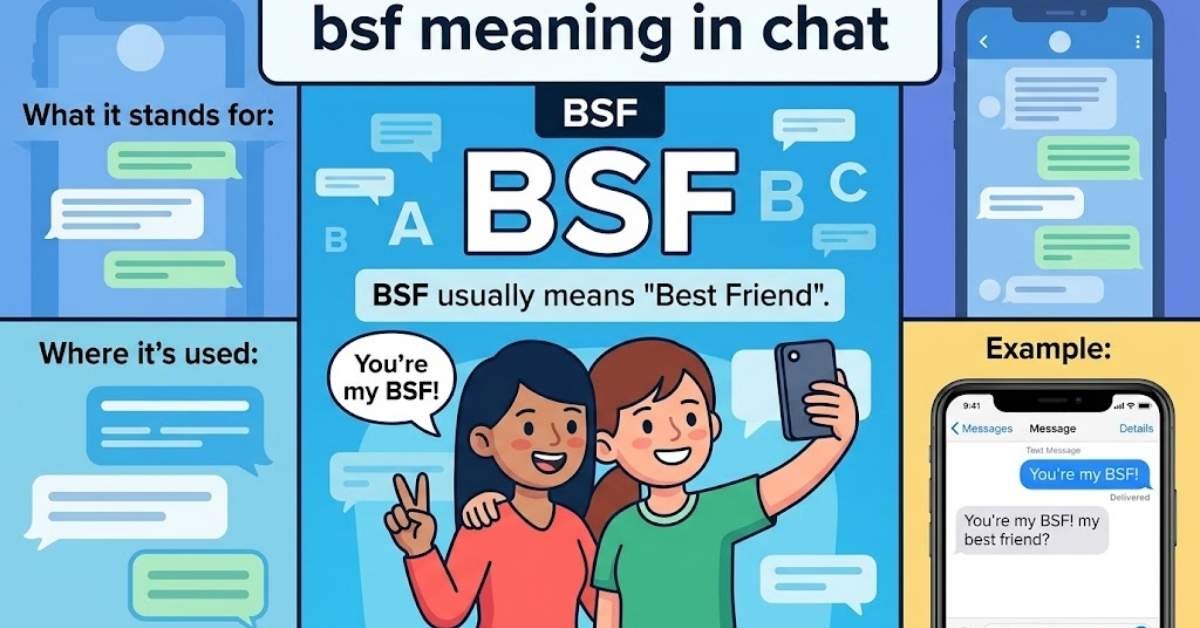
BSF stands for Best Friend. It’s one of the best friend abbreviation options people use in texting culture. Some people read the F as “forever” and treat it like Best Friend Forever, but the most common reading is plain best friend.
It’s also less famous than BFF. If you want a deeper look at the classic version, check the BFF meaning section later in this guide. The idea is the same: a close friend who gets a special label.
Quick Examples:
Here’s how it looks in the wild. A friend writes, “Happy birthday to my BSF!” under a photo. Another says, “Can’t do Friday, my BSF needs me” in a text message.
You’ll also spot it in Instagram friendship captions like “Me and my BSF at the beach.” It’s short, warm, and easy to type. That’s why it sticks.
Origin & Background
Nobody can point to the exact day BSF was born. Online slang rarely has a birth certificate. What we do know is that people have shortened “best friend” for years, first on phone keypads, then in chat apps.
The best friend abbreviation family grew from that habit. BFF came first and got famous. BSF showed up as a simpler cousin without the “forever” promise attached.
Why BSF Became Popular:
People like it for three reasons. It’s fast to type, it feels casual, and it carries less pressure than “forever.” You can call someone your BSF without signing a lifetime contract.
It also fits modern digital language. Teens and adults alike drop it in social media posts, TikTok comments, and WhatsApp Status updates. Short labels win when everyone’s typing with their thumbs.
Real-Life Conversations
Slang only makes sense in context. So let’s watch BSF in three common places.
WhatsApp Chat
Picture a group chat on a Sunday morning. Your friend Sana writes, “Brunch tomorrow? My BSF is coming too.” Nobody blinks, because everyone knows she means her best friend.
In WhatsApp chats, BSF often shows up in WhatsApp Status captions too. A quick photo plus “BSF vibes” tells your contacts who matters to you. It’s friendly and low key.
Instagram DM
Instagram DMs are more private, so the tone shifts. Someone might send a reel with “this is so you, BSF.” It’s playful, a little affectionate, and usually comes with laughing emojis.
On a public post, Instagram captions do a different job. They announce the friendship to the world. In a DM, BSF feels like an inside joke between two people.
Text Message
In a plain text message, BSF works as a nickname. “Call me when you land, BSF” sounds warm without trying too hard. It’s the kind of line you send when you care but you’re also busy.
Short texts are where this label shines. You don’t need a paragraph to show friendship appreciation. Three letters can do the job.
Emotional & Psychological Meaning
Behind the slang sits something real. A BSF label usually points to emotional closeness, trust, and comfort. It says, “You’re someone I can be myself around.”
Psychologists often describe close friendships as a source of emotional support. Friends who share personal thoughts without fear tend to build strong emotional connections. A simple label like BSF is a tiny window into that bond.
Here’s what usually sits behind it:
- Consistency: this person shows up, even when life gets messy.
- Shared experiences: inside jokes, old trips, and late night talks.
- Emotional understanding: they get your mood before you explain it.
Calling someone BSF can also be a quiet thank you. It’s a way of saying, “I notice what you do for me.” That’s friendship appreciation in its smallest form.
Usage in Different Contexts
BSF doesn’t sound the same everywhere. Your audience changes the meaning a bit. Let’s walk through the four spots where it pops up.
1. Social Media
On social media, BSF is a public label. You’ll see it in Instagram friendship captions, TikTok comments, and Snapchat streak chats. It signals friendship labels without a long explanation.
Mind your social media etiquette though. If you tag someone as your BSF in public, make sure they feel the same way. Otherwise it can get awkward fast.
2. Friends & Relationships
Between friends and relationships, BSF is warm and informal. It works well when you want to show friendship bond without sounding dramatic. A birthday text like “Happy birthday BSF, I’m lucky to know you” lands nicely.
In a romantic relationship, some couples also call each other BSF. They mean “my best friend and my partner.” Context makes it clear.
3. Work or Professional Settings
At work, BSF is risky. It’s informal language, and most professional emails or business communication don’t need it. Using it with a manager might look odd.
With close coworkers, it can be fine in a private chat. Still, workplace slang should stay out of client messages and official threads. When in doubt, write “best friend” in full.
4. Casual vs Serious Tone
The same three letters can sound casual vs. serious depending on how you say them. A funny meme caption with BSF feels light. A long heartfelt message that ends with “you’re my BSF” feels deep.
Pay attention to your tone before you hit send. Casual conversations can handle quick slang. A serious talk after a fight deserves clearer words.
Common Misunderstandings
Slang causes mix ups. Here are the four slip ups people make most.
1. Confusing BSF with BFF
Many people assume BSF and BFF are identical. They’re close, but BSF vs. BFF isn’t a perfect match. BFF explicitly says “forever,” while BSF leans on the simple idea of best friend.
For most chats, the difference won’t matter. Still, if someone cares about the “forever” feeling, BFF may fit better. Read the vibe before you decide.
2. Assuming It’s Always Serious
A BSF label can be a joke. Someone might call a coworker “BSF” because they shared coffee and a laugh. That doesn’t mean they’re planning a friendship ceremony.
Treat it as a friendly signal, not a legal document. If you’re unsure, ask lightly: “Aw, am I really your BSF?” Most people smile and clear it up.
3. Using It Too Early
Calling someone your BSF after one week can feel like a lot. Close friendship takes time to grow. Rushing the label may make the other person uncomfortable.
Wait until you’ve shared real moments. Shared memories and honest talks earn the title. Let the friendship set the pace.
4. Thinking It’s Formal
Some readers see three capital letters and think it’s official. It isn’t. BSF is informal language, built for chats and captions, not for formal communication.
If you’re writing a speech, a school form, or an email to a boss, skip it. Write “best friend” and move on.
Comparison Table
Slang pairs get tangled fast. This table sorts out the ones people ask about most.
| Term | Usually Means | Tone | Best Used In |
| BSF | Best friend | Casual, warm | Texts, captions, DMs |
| BFF | Best friend forever | Warm, a bit dramatic | Social posts, birthdays |
| BF | Boyfriend | Romantic | Couples, relationship talk |
| Bestie | Very close friend | Playful, light | Chats, comments |
| Close friend | Someone you trust | Neutral | Any setting |
Key Insight:
The big takeaway is BSF vs. BF. One letter changes everything. Best friend vs. boyfriend is a mix up that can lead to real confusion, so read the full message before you react.
Meanwhile BSF vs. bestie is mostly a style choice. Bestie feels softer and more playful, while BSF feels a touch cooler and shorter.
Variations / Types of BSF Usage
BSF isn’t one size fits all. People stretch it to match different friendships. Here are the types you’ll hear about:
- Online BSF: a friend you met in a game or a group chat and never met in person.
- School BSF: your lunch table buddy and homework partner.
- College best friend: the roommate who knows your 2 a.m. snack order.
- Work BSF: the coworker who gets your office jokes.
- Childhood BSF: someone who’s known you since scraped knees and school buses.
- Temporary BSF: a short term bond, like a summer camp pal.
- Travel BSF: the stranger you click with on a trip.
- Secret BSF: a friend you rarely mention publicly but trust deeply.
- Group BSFs: a tight circle that all share the title.
- Long-distance BSF: a best friend who lives in another city or country.
- Support BSF: the person who texts back during your hardest week.
These labels show how modern friendships work. They don’t always fit the old picture of one best friend for life. Many people have several close ties.
How to Respond When Someone Uses BSF
You’ve been called a BSF. Now what? Your reply depends on your mood and your bond. Here are four styles you can borrow.
Casual Replies
If you want something light, keep it short. Try “Aw, same to you!” or “Love that, BSF!” These casual replies feel natural in a text message or a WhatsApp chat.
You can also add a simple emoji. It keeps the energy friendly without making things heavy.
Funny Replies
Humor works great here. Try “Finally, someone noticed my greatness.” Or “Wow, I’m a BSF now? Do I get a badge?” These funny replies break the ice and keep things playful.
Just make sure the other person is in a joking mood. Humor lands best when the friendship already feels easy.
Mature/Confident Replies
If you want to sound steady, be direct. Say “That means a lot to me, thank you.” Or “I feel the same way about you.” These mature replies show you take the compliment seriously.
They also build trust. A calm, honest answer tells the other person you value the bond.
Private/Respectful Replies
Maybe you’re not sure you feel the same. That’s okay. Say “Thanks, I really appreciate you” without repeating the label. This kind of respectful reply keeps things kind and honest.
You can also move the talk to a private moment. A quick voice note or a call may feel better than public comments.
Regional & Cultural Usage
Slang travels, but each place gives it a spin. Here’s a quick, honest look. Note that usage varies by person and community, so treat these as general patterns.
Western Culture
In Western culture, people often split labels into BFF, bestie, and BSF. Many use them casually on Instagram and TikTok. The tone tends to be playful and public.
You’ll also see birthday messages where friends post photos and tag each other as best friends. It’s part of the social media comments habit.
Asian Culture
In Asian culture, close friendship is often expressed through actions, like sharing food or showing up when someone’s sick. Slang like BSF exists, especially among younger generations who use English online. Many also mix it with local words.
Group chats and school ties matter a lot. So a BSF label may be shared across a small circle, not just one person.
Middle Eastern Culture
In Middle Eastern culture, friendship is often tied to loyalty and family-like bonds. Young people who chat in English may use BSF on WhatsApp and Snapchat. Many switch between Arabic and English in the same message.
Respect and warmth matter here. A BSF label shared in a private chat feels more natural than a loud public post for some people.
Global Internet Usage
Across the global internet usage landscape, BSF acts like a shared shortcut. English slang hops borders through memes, short videos, and chat apps. It’s an example of cultural differences in slang blending into one big online language.
Expect regional slang usage to keep shifting. New spellings and twists pop up every year, so staying curious helps.
Other Meanings of BSF You Might Run Into
Not every BSF is about friendship. In some places, BSF refers to Border Security Force, a well known force in India. News headlines and official pages use it this way.
BSF can also stand for Bible Study Fellowship, an organization that runs Bible study groups. Context tells you which one is meant. If the chat is about school drama, it’s friends. If it’s about the border or a church group, it’s something else.
Tips for Using BSF the Right Way
Want to use BSF without any awkward moments? Start with these simple habits:
- Match the mood. Use it when the conversation is relaxed.
- Know your audience. Skip it in professional communication.
- Check your bond. Don’t label someone who isn’t there yet.
- Be clear. If someone might misread it, write “best friend” in full.
These steps help you use texting abbreviations with confidence. Good slang should connect people, not confuse them.
Conclusion
BSF is a small label with a big feeling. It usually means best friend, it fits digital communication perfectly, and it carries trust, comfort, and care.Use it with people who’ve earned the title. Read the tone, watch the setting, and pick a reply that matches your bond. Slang is just a shortcut to what already exists between friends.
Has someone ever called you their BSF? Share your story in the comments and tell us what you said back. If this guide helped, pass it along to a friend who always asks what that text meant.
FAQs
1. What does BSF mean in texting?
In texting, BSF meaning is best friend. People use it in text messages, Instagram DMs, and WhatsApp chats as a quick, friendly label.
2. Is BSF the same as BFF?
They’re very close, but not identical. BFF means best friend forever, while BSF usually means best friend. Both show close friendship.
3. Can BSF mean boyfriend?
Not usually. Boyfriend is shortened to BF. Still, some couples use BSF to mean “my best friend and partner,” so read the context.
4. Is it okay to use BSF in professional settings?
It’s best to avoid it. BSF is informal language, so keep it for friends and casual chats. In professional emails, write “best friend” in full if you must mention it.
5. Why do people use BSF instead of best friend?
It’s faster to type and feels relaxed. Texting abbreviations save time, and they give your message a casual tone.
6. Can you have more than one BSF?
Yes. Many people have multiple best friends or a circle of group BSFs. Friendship isn’t a contest, and you can feel deeply close to several people.
7. Is BSF only used by teenagers?
No. Teen slang often spreads first, but adults use BSF too, especially in Instagram captions and chats. Anyone who likes short, friendly labels can use it.