
WBY means “What About You.” People type it to hand the conversation back to you after sharing something about themselves.You’ve probably seen it in text messages, Instagram DMs, or a WhatsApp chat and wondered if it’s rude or just lazy.
Neither. It’s one of the friendliest bits of internet slang out there.Let’s break down where it came from, how to use it, and how to reply without freezing up.
WBY: Quick Meaning
Think of WBY as a tiny conversation starter that doubles as a follow-up question.
It keeps casual communication moving without making anyone type a full sentence.
Simple Definition
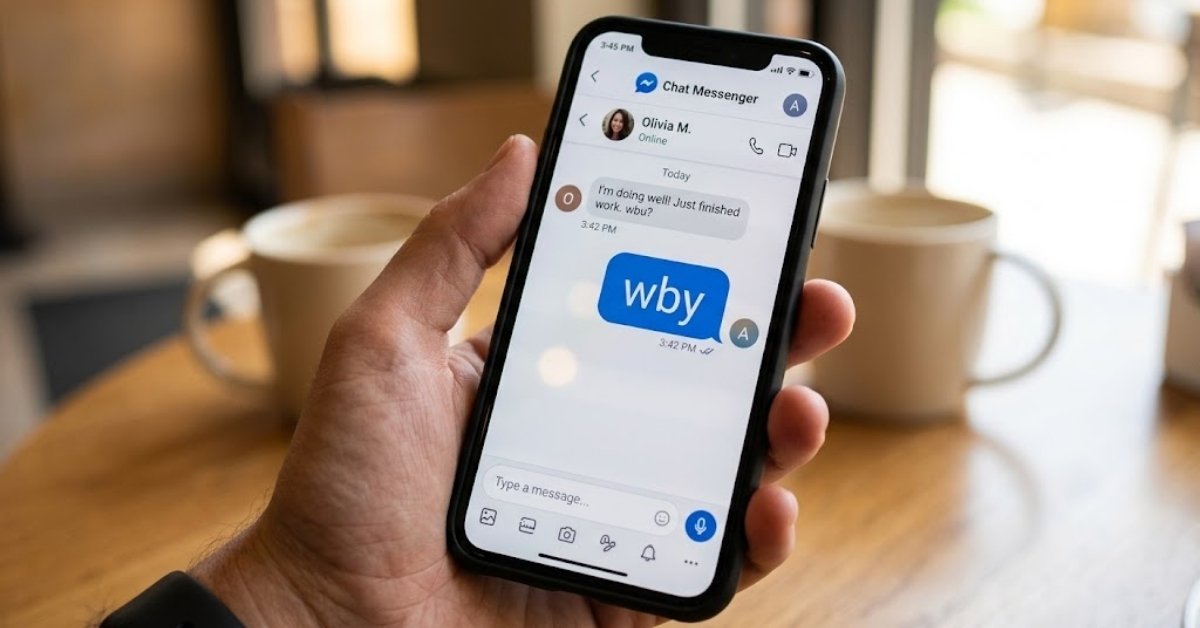
WBY is an internet abbreviation for “What About You.”
You use it right after answering a question yourself.
It works as a response invitation.
You’re saying, “That’s me. Now tell me yours.”
Quick Examples
Here are a few usage examples you’ll see daily:
- “I’m good, just tired. WBY?“
- “Pizza tonight for me. WBY?“
- “Busy Monday here. WBY?“
Notice the pattern.
You answer first, then pass the ball.
Origin & Background of WBY
Nobody can point to the exact day someone first typed WBY.
What we do know is where texting slang like this grew up.
Early SMS limited each message to 160 characters.
Mobile phone messages also cost money, so people trimmed every word they could.
How It Became Popular
Online forums and internet chat culture kept the habit alive.
Typing fast mattered when you chatted with five people at once.
Then messaging apps and social media messaging took over.
Quick replies became normal, and WBY spread through Snapchat, TikTok, and iMessage like gossip at a school gate.
Real-Life Conversations
Definitions only go so far.
Seeing WBY inside real dialogue makes it click.
WhatsApp Conversation
Aisha: Hey, how was your day?
Sam: Long. Spent hours on a new project. WBY?
Aisha: Pretty chill. Made tea and watched Netflix.
Sam: Sounds perfect.
Instagram DM Conversation
Maya: Loved your travel reel!
Leo: Thanks! Winter travel in the mountains was wild. WBY, any trips planned?
Maya: Not yet. Saving up.
Leo: Same, honestly.
Text Message Conversation
Dan: Movie night at my place Friday?
Priya: I’m in. I’ll bring snacks. WBY, what are you bringing?
Dan: Playlists and bad jokes.
Priya: Deal.
Emotional & Psychological Meaning
WBY looks small, but it carries real social meaning.
There’s a bit of communication psychology tucked inside those three letters.
1. It Shows Interest
When you add WBY, you show curiosity about the other person.
It says, “I don’t want to hog this chat.”
That small signal builds warmth fast.
People feel heard, which boosts social engagement.
2. It Maintains Conversation Flow
Ever sent “I’m fine” and then watched the chat die?
A one-sided conversation fizzles quickly.
WBY fixes that by adding conversation balancing.
It keeps the conversational rhythm alive.
3. It Reflects Modern Communication Style
We type fast and think faster.
Modern communication rewards efficient communication.
WBY is part of that digital language.
It’s short, clear, and polite enough for most everyday conversations.
Usage in Different Contexts
The same three letters can feel different depending on where you use them.
Context decides everything.
Social Media
On Instagram comments, TikTok replies, and Twitter/X, WBY pops up all the time.
It invites others to share, which lifts user engagement.
Gaming chats and international communities use it too.
It’s a quick way to include newcomers.
Friends & Relationships
With friends and partners, WBY feels warm.
It’s a gentle way to say, “I care how your day went.”
Family conversations use it as well, especially among younger relatives.
It’s a nice way to check in during family time.
Work or Professional Settings
In a quick Slack message to a coworker, WBY is usually fine.
In professional emails, skip it.
Clients and managers expect complete sentences.
Write “And you?” or “How about you?” instead.
Casual vs Serious Tone
WBY has a casual tone built in.
It fits a friendly conversation about lunch plans or weekend goals.
During a serious conversation, it can feel flippant.
If someone’s sharing a stressful day, ask a full question and show you mean it.
Common Misunderstandings
A lot of confusion comes from how little we type.
Short chat abbreviations leave room for guesswork.
1. Thinking It Means Something Different
Some people confuse WBY with WYD or WYA.
Those are different questions entirely, so we’ll cover them below.
Others guess random meanings from context.
Always check the full phrase if you’re unsure.
2. Assuming It’s Rude
Some readers think the abbreviation sounds curt.
It rarely is, since the whole point is politeness.
Tone usually comes from the sentences around it.
A warm message with WBY reads warm.
3. Using It in Formal Writing
WBY doesn’t belong in academic communication or business letters.
Formal writing needs the full phrase.
Think of it like wearing sneakers to a wedding.
Comfortable, sure, but the room expects something else.
Comparison Table
Here’s a fast look at how WBY stacks up against other common abbreviations:
| Abbreviation | Full Phrase | What It Does | Best Used In |
| WBY | What About You | Returns the question | Casual chats |
| HBU | How About You | Same as WBY | Casual chats |
| WYD | What You Doing | Asks about activity | Friends, DMs |
| WYA | Where You At | Asks location | Meetups |
| HMU | Hit Me Up | Invites contact | Social media |
| LMK | Let Me Know | Asks for an update | Work or friends |
Variations and Similar Expressions
WBY has plenty of cousins in texting slang.
Knowing them helps with digital literacy and keeps you from sending the wrong message.
1. HBU
HBU means “How About You.”
It does the same job as WBY.
Most people use them interchangeably.
Pick whichever feels natural.
2. WYD
WYD means “What You Doing.”
It’s a casual conversation starter for friends.
It asks about right now, not your whole day.
“WYD?” and “WBY?” aren’t the same question.
3. WYA
WYA means “Where You At.”
You’ll see it before meetups.
It’s about location, not feelings.
“WYA, I’m outside” is classic.
4. HMU
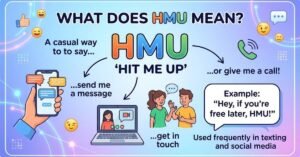
HMU means “Hit Me Up.”
It’s an open door to message or call.
People drop it on social media posts and in Snapchat stories.
It invites contact without any pressure.
5. IDC
IDC means “I Don’t Care.”
It can sound blunt, so use it carefully.
Between close friends it’s fine.
With anyone else it might sting.
6. TBH
TBH means “To Be Honest.”
People use it before a candid opinion.
It signals sincerity, or sometimes a gentle warning.
“TBH, I loved it” lands well.
7. BTW
BTW means “By The Way.”
It adds a side note without derailing the topic.
You’ll find it in instant messaging and casual emails.
It’s among the oldest internet acronyms still in use.
8. IDK
IDK means “I Don’t Know.”
It’s honest and quick.
Used too often, it can feel dismissive.
Add a follow-up so the chat doesn’t stall.
9. LMK
LMK means “Let Me Know.”
It’s handy for plans and deadlines.
It’s more accepted at work than most slang.
Even so, spell it out with clients.
10. FYI
FYI means “For Your Information.”
It’s the most business-friendly abbreviation on this list.
You’ll see it in email subject lines daily.
Tone matters, though, because it can sound clipped.
Other familiar shortcuts include LOL, BRB, LMFAO, GNG, and EMP.
Each one is online shorthand that grew from the same habit of typing less.
How to Respond When Someone Uses WBY
Getting a WBY can feel like being handed a hot potato.
Don’t panic, since you’ve got plenty of options.
The best reply answers honestly and then returns the question if it fits.
That keeps the mutual conversation going.
Casual Replies
Keep it short and easy:
- “Good, just relaxing. You?”
- “Busy day, but fine. WBY?“
Friendly Replies
Add a little warmth:
- “Pretty good! Had pizza and caught up on homework. How’s your day?”
- “Can’t complain, got some quiet time at last. And you?”
Funny Replies
A joke breaks tension:
- “Surviving on coffee and hope. WBY?”
- “Living the dream, if the dream is Monday. You?”
Mature / Confident Replies
Be direct, but kind:
- “Doing well, thanks for asking. How are you holding up?”
- “Busy but happy. What’s new with you?”
Respectful or Private Replies
You don’t owe anyone every detail.
A polite boundary works fine.
- “Just a quiet day. Thanks for checking in!”
- “Keeping things low-key. How about you?”
Regional & Cultural Usage
Slang travels, but each place adds its own flavor.
WBY shows up almost everywhere, with small differences.
Western Culture
In the US, UK, and Canada, WBY is everyday conversational English.
Native English speakers use it without thinking.
It’s most common among younger generations and young professionals.
Older adults see it less often, though many pick it up from their kids.
Asian Culture
In many Asian countries, English is a second language.
Non-native English speakers often learn WBY from apps and shows.
It spreads through messaging apps and gaming.
Politeness norms shape how often people use it with elders.
Middle Eastern Culture
Young people across the region use WBY on WhatsApp and Instagram.
It often mixes with Arabic or local phrases.
Respect and formality still matter.
People may use the full phrase with older relatives or seniors at work.
Global Internet Usage
Global internet culture has flattened many differences.
A teen in Toronto and a student in Karachi may type the same shortcut.
Social media circles and online interaction make that sharing easy.
WBY now counts as universal modern slang.
Texting Etiquette: When to Use WBY and When to Skip It
Good texting etiquette is simple: match the mood.
WBY suits lighthearted chats best.
Skip it when someone shares bad news.
A real question like “How are you coping?” shows more care.
Also avoid stacking abbreviations in one message.
Three in a row can feel cold, and online etiquette favors clarity over speed.
Tips to Use WBY Without Sounding Lazy
Want to keep it friendly?
Try these quick habits:
- Answer first. Share something real before asking back.
- Be specific. “Tired after a long shift” beats “fine.”
- Follow up. React to their answer so the chat doesn’t stall.
- Know your audience. Use full words with bosses and strangers.
Small tweaks make digital communication feel more human.
You’ll sound curious instead of copy-pasted.
Conclusion
WBY means “What About You,” and it keeps online conversations balanced. It started with early SMS limits and stuck around because it works.
Use it with friends, skip it in formal emails, and always answer honestly first. Have a favorite reply or a slang term that confuses you? Drop it in the comments, and share this with the friend who still asks what everything means.
FAQs
What does WBY mean in texting?
WBY stands for “What About You.” You use it after answering a question to ask the same one back.It’s common in text messages, DMs, and social media messaging. It keeps the conversation flow natural.
Is WBY rude?
No, it’s usually polite. It shows interest in the other person.Tone depends on the rest of your message. Pair it with a warm answer and you’re fine.
Is WBY the same as HBU?
Yes, they mean nearly the same thing. HBU is “How About You.”Both are conversation response tools. Choose whichever sounds more like you.
Can WBY be used in professional emails?
It’s best avoided. Professional communication works better with full phrases.A quick Slack chat with a close coworker may be fine. When in doubt, write “And you?”
Why do people use WBY instead of the full phrase?
Speed and habit. Fast communication and character limits shaped how we type.It also sounds casual and relaxed. That fits everyday conversations perfectly.
Is WBY used by older adults?
Sometimes, but less often. Younger people drive most texting slang.Plenty of parents and grandparents learn it from family chats. It’s catching on across age groups.
Can WBY start a conversation?
Not on its own. It needs a statement before it, since it asks you to return something.For starting a chat, try “Hey, how’s your day?” Then use WBY after you reply.