
Texting moves fast, and so does slang. One minute you understand every abbreviation your friends send, and the next minute a new one shows up out of nowhere. “JSP” is one of those short, simple-looking terms that can leave you staring at your screen for a second longer than you would like to admit. It looks technical, but in most chats it has nothing to do with computers at all.
This guide walks through everything JSP can mean, where it came from, and how people actually use it across WhatsApp, Instagram, TikTok, and Snapchat. By the end, you will know exactly how to read it, how to reply, and how to use it yourself without sounding awkward or out of touch.
What Does JSP Mean in Text & Chat?
In most everyday texting, JSP is a short way of softening a comment. People type it right after a joke, a tease, or an opinion to let the other person know they should not take it too seriously. It works almost like a small wink in written form.
The tricky part is that JSP does not always carry one fixed meaning. In English-language chats, it usually points to “just playing” or “just saying.” In French-language chats, the same three letters mean something completely different: “I don’t know.” That is why reading the surrounding words matters so much before you decide what someone meant.
Here is a quick snapshot of what JSP usually signals:
| Context | Likely Meaning | Common Feeling |
| English casual chat | Just playing / just kidding | Light, humorous |
| English opinion-sharing | Just saying | Honest, low-pressure |
| French casual chat | Je sais pas (I don’t know) | Neutral, shrug-like |
| Tech or coding chat | JavaServer Pages | Professional, technical |
Once you know these four buckets, spotting the right meaning becomes much easier.
Full Form, Stands For & Short Meaning of JSP
JSP does not have one single official full form. Instead, it stands for different phrases depending on who is typing and in what setting.
The most common expansions include:
- Just Playing – used to show a comment was a joke, not a real complaint
- Just Saying – used to share an opinion without sounding pushy
- Just Saying, Period – a firmer version, used when someone wants their point to stand without further debate
- Je Sais Pas – French for “I don’t know,” common among French speakers and international group chats
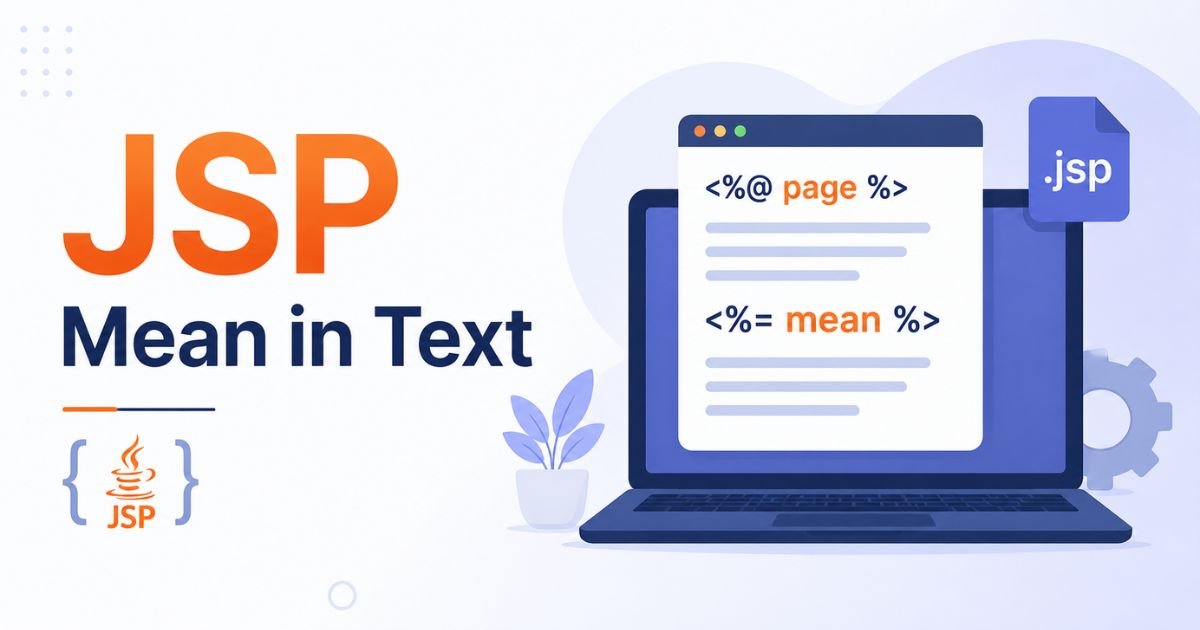
- JavaServer Pages – a technical term from web development, unrelated to casual texting
In short, JSP is less of a fixed abbreviation and more of a flexible tag. The letters stay the same, but the intended phrase changes with the crowd you are chatting with.
Origin, History & First Known Use of JSP
Text slang like JSP grew out of a simple problem. Typed messages strip away tone of voice, facial expression, and body language. A joke that would land perfectly in person can read as rude or harsh on a screen. Early internet users solved this gap with short tags such as LOL, JK, and lol, which quickly became normal parts of digital conversation.
JSP followed the same path. As texting and instant messaging became the main way friends talked day to day, people needed quick tools to mark a comment as playful rather than serious. “Just playing” and “just saying” were already commonly spoken phrases, so shortening them to JSP was a natural next step once character limits and fast typing became the norm.
On the French side, “je sais pas” is a phrase French speakers have used in casual conversation for generations, long before text messaging existed. When texting went global, French teens and young adults naturally shortened it the same way English speakers shortened their own phrases. As group chats mixed speakers from different countries, both versions of JSP began appearing side by side, which is part of why the term can feel confusing to newcomers.
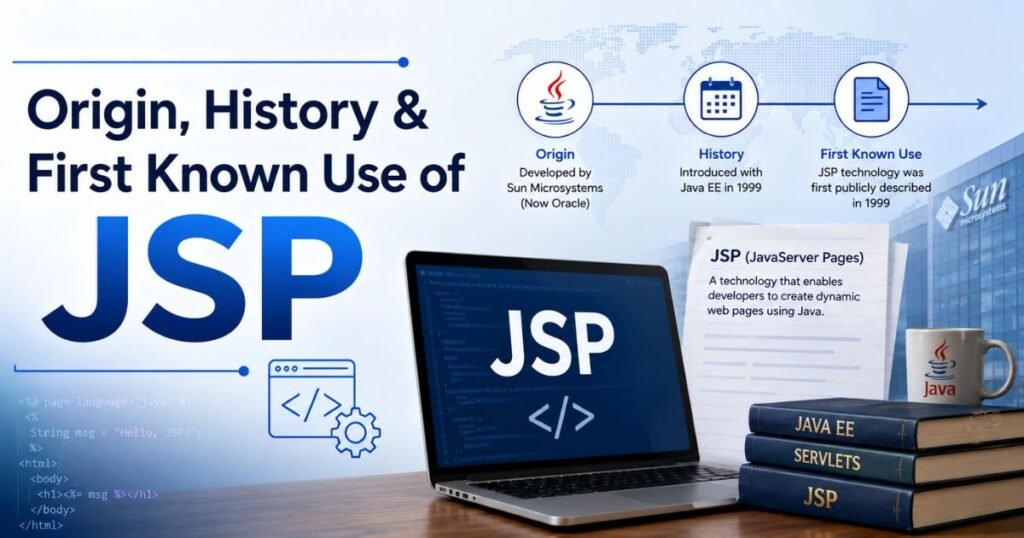
The JavaServer Pages meaning is older still, dating back to a web technology used by programmers to build dynamic websites. It has nothing to do with slang, but it shares the same three letters, so it occasionally causes mix-ups in search results and coding forums.
How People Use JSP in Daily Conversations
In daily chatting, JSP almost always shows up at the end of a sentence, right after the main point has been made. This placement is intentional. It lets the reader take in the comment first, then immediately soften how they interpret it.
People commonly use JSP to:
- Cushion a tease so a friend does not take it personally
- Share a blunt opinion without sounding like they are picking a fight
- Add a light, joking tone to a sarcastic remark
- Admit uncertainty in a casual way, especially in French-influenced chats
- Keep a fast-moving group chat feeling relaxed and friendly
Emojis often ride along with JSP and change how strong the message feels. A laughing emoji next to JSP usually confirms a playful tone. No emoji at all can make the same message feel more serious or even a little sharp, so many texters pair JSP with a visual cue to avoid confusion.
Tone also depends heavily on the relationship between the two people chatting. Close friends and couples who joke around often use JSP freely, since both sides already understand the playful pattern. Between newer friends or coworkers, the same phrase can land differently, so it helps to read the room first.
JSP Meaning Across WhatsApp, Instagram, TikTok & Snapchat
JSP shows up slightly differently depending on the platform, mostly because each app has its own chatting culture.
| Platform | Typical Use of JSP |
| Common in personal and family group chats, often softening opinions or jokes | |
| Frequent in DMs and comment replies, especially among younger users | |
| TikTok | Shows up in comment sections to add a joking tone to blunt reactions |
| Snapchat | Used in quick back-and-forth chats, often paired with playful stickers or emojis |
On WhatsApp, JSP often appears in longer family or friend group threads, where the tone is already relaxed and familiar. Instagram DMs lean more toward the flirty or teasing use of JSP, especially between people who already know each other well.
TikTok comment sections tend to use JSP as a quick way to add humor to an otherwise blunt statement, since comments are short and public. Snapchat conversations move fast, so JSP works as a short tag that keeps the pace going without slowing down to explain a joke.
Different Meanings of JSP in Other Fields
Outside of texting, JSP carries a completely different meaning in professional and technical spaces.
In web development, JSP stands for JavaServer Pages, a technology used to build dynamic, data-driven websites using Java code mixed with HTML. Developers and coding forums use this meaning constantly, and it has zero connection to casual chatting.
A few other niche or rare expansions also show up occasionally, though they are far less common:
- Just Some Pointers – used in advice-giving contexts
- Just Stay Positive – used as a short motivational phrase
- Just Saying Point-blank – a rare variant of “just saying, period”
These extra meanings are uncommon enough that most readers will not run into them outside of very specific communities. Still, it helps to know they exist so a stray message does not feel completely out of place.
Common Confusions, Mistakes & Wrong Interpretations
The biggest mistake people make with JSP is assuming it only has one meaning. Because the letters stay the same across languages and fields, readers sometimes apply the wrong meaning to a message and misread the intent completely.
Some frequent mix-ups include:
- Reading a French “je sais pas” JSP as if it meant “just saying,” which changes the whole sentence
- Mistaking a coding discussion about JavaServer Pages for slang, especially in mixed tech and casual chats
- Assuming JSP always softens a comment, when in blunt or one-word messages it can still feel sharp
- Overusing JSP so often that it starts to feel insincere or like a verbal tic rather than a genuine tone marker
- Using JSP in professional emails or workplace chats, where it usually reads as unclear or unprofessional
Tone also plays a bigger role than most people expect. A message like “I hate you jsp” clearly reads as a joke between close friends, but the same words sent to someone unfamiliar with the sender’s humor could easily come across as genuinely upsetting. Reading the full conversation, not just the last three letters, is the safest way to avoid these mistakes.
Similar Terms, Alternatives & Related Slang
JSP is part of a larger family of texting shortcuts that all serve a similar purpose: adding tone to a message that would otherwise feel flat or ambiguous.
| Term | Meaning | How It Differs from JSP |
| JK | Just kidding | Fully cancels the seriousness of a statement |
| JS | Just saying | Neutral, no playful energy attached |
| IMO | In my opinion | Focused on personal viewpoint, not tone softening |
| TBH | To be honest | Signals sincerity rather than humor |
| LOL | Laugh out loud | Marks something as funny, not necessarily true or false |
The key difference between JSP and JK is energy. JK usually shuts a joke down completely, almost like saying “that was not real.” JSP tends to keep the playful mood going, which is why it fits so naturally into ongoing banter between friends.
Also Read This:SPWM Meaning in Text
JS and IMO both lean more neutral and are often used for genuine opinions rather than jokes. TBH signals honesty, while JSP signals a lighter, less confrontational tone. Knowing these small differences helps texters pick the right tag for the right moment.
Examples of JSP in Real Chat Situations
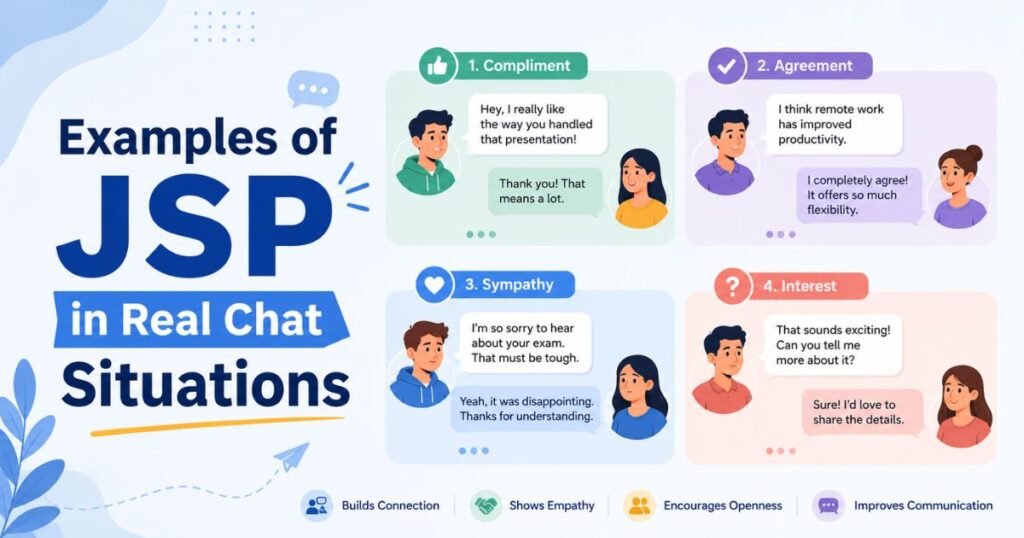
Seeing JSP in action makes the meaning much clearer than any definition alone.
Example 1 – Playful tease between friends Person A: “You are always late, I swear.” Person B: “jsp 😂 you’re only five minutes early yourself.”
Example 2 – Softening an opinion Person A: “That movie was actually kind of boring, jsp.” Person B: “Fair, I fell asleep halfway through too.”
Exemple 3 – French usage Person A: “Tu viens à quelle heure?” Person B: “jsp encore, je te dis plus tard.”
Example 4 – Group chat banter Person A: “You forgot my birthday completely.” Person B: “What? No I didn’t, I texted you at midnight!” Person A: “jsp 😂 I know, just wanted to see your reaction.”
In each of these cases, JSP changes how the sentence feels. Without it, some of these messages could easily be misread as genuine complaints instead of jokes.
How to Reply When Someone Says JSP
Replying to JSP is usually simple once you understand which version was meant. The safest first step is checking the tone of the whole conversation rather than reacting to the last three letters alone.
H3: Good Reply Options
- If it was a joke: laugh it off or send a playful comeback of your own
- If it was an opinion: respond with your own view, since JSP invites open conversation
- If it was the French version: answer with what you do know, or simply move the topic forward
- If you are unsure: ask directly, such as “wait, do you mean just playing or just saying?”
- If the tone felt off: check in gently, since not every JSP successfully hides real frustration
Matching the energy of the original message usually works best. A playful JSP deserves a playful reply, while a more thoughtful “just saying” deserves a genuine response rather than a joke.
Is JSP Still Popular? Trends & Online Usage

JSP remains a common sight across group chats, comment sections, and direct messages, especially among younger users who grew up texting in short bursts. It has settled into a stable spot in everyday slang rather than fading out like some older abbreviations.
A few usage patterns stand out:
- Most common among Gen Z and younger millennials
- Frequently paired with emojis to strengthen or soften the tone
- Rarely spoken out loud, since it works better as written shorthand
- Still overshadowed in some circles by full phrases like “just kidding” or “just saying,” especially among older texters
Because it fills a real gap between plain text and spoken tone, JSP is likely to stick around for a while yet, even as new slang terms continue to appear around it.
Conclusion
JSP might look like a simple three-letter abbreviation, but it does a lot of work in modern texting. Whether it means “just playing,” “just saying,” “I don’t know” in French, or something technical like JavaServer Pages, the surrounding conversation always holds the real clue. Keep an eye on tone, emojis, and platform, and JSP will never leave you guessing again.
At the end of the day, slang like JSP exists to make digital conversations feel more human. It fills in the gaps that plain text leaves behind, softening jokes, easing blunt opinions, and keeping fast-paced chats friendly. Once you understand the small differences between its versions, you can use it with confidence and read it correctly every time it lands in your inbox.