
TTYL stands for Talk To You Later. It is one of the oldest and most trusted pieces of internet slang, used to close a chat, pause a conversation, or say a quick friendly goodbye without sounding cold or final. If you have ever wondered whether someone typing “ttyl” is mad at you or just busy, the short answer is almost always the second one.
Let’s break down exactly what it means, how people use it across different apps, and when you should think twice before typing it yourself.
What Does TTYL Mean in Text?
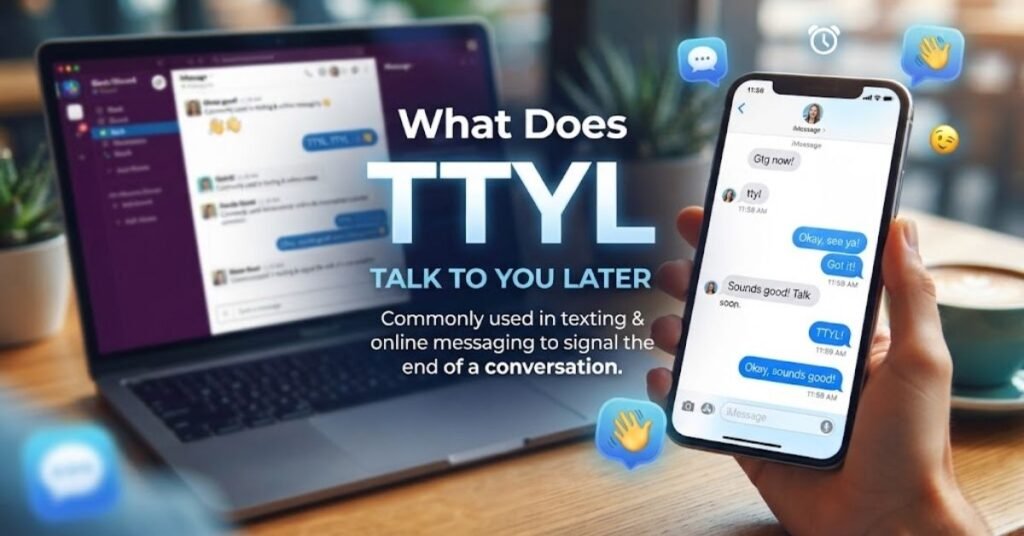
TTYL simply means “Talk To You Later.” It is a soft way of ending a chat without shutting the door on it completely. Think of it as the digital version of waving goodbye at the end of a phone call.
People use it in text messages, direct messages (DMs), and everyday online chats when they need to step away but still want to keep the conversation open for later. It is not a breakup line. It is more like a “bye for now” than a final goodbye.
The Most Common Meanings of TTYL
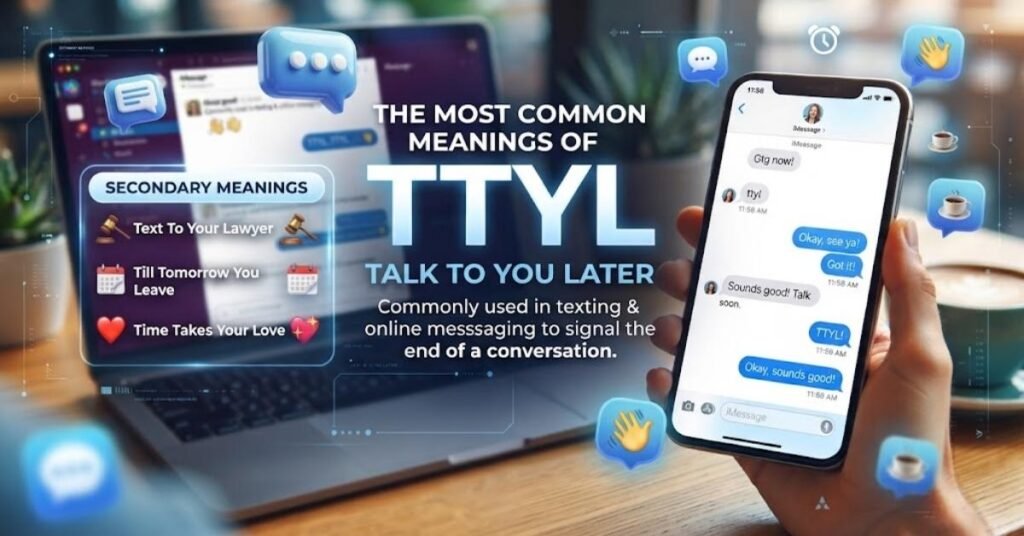
TTYL rarely means just one thing. Context, tone, and timing all shape how it should be read.
1. Ending a normal chat
Most of the time, TTYL just wraps up a normal exchange. Someone has said what they needed to say, and now it’s time to log off for a bit.
This is the most common use across casual texting and social media platforms.
2. Short break in conversation
Sometimes TTYL signals a conversation pause rather than a full stop. The person might be stepping into a meeting, jumping in the shower, or dealing with something that pulls their attention away.
It works like an “I’ll be back” without promising an exact time.
3. Friendly goodbye
In casual conversation, TTYL is often just a warm sign off. It replaces “bye” or “talk soon” with something a little more relaxed and familiar.
Friends use it constantly without putting much thought into it at all.
4. Soft exit in awkward chats
TTYL can also be a gentle way out of a conversation that feels a bit awkward or has run its course. It lets someone leave without being blunt.
This is where tone matters most, since the same three letters can feel completely different depending on what came before them.
How TTYL Is Used in Real Conversations
Where TTYL shows up changes how it should be read. A text from a friend hits differently than one from a coworker.
Friends & Casual Texting
Among friends, TTYL is almost automatic. It closes out a long thread of memes, plans, or venting sessions with zero drama attached.
Nobody overthinks it here. It is just casual conversation doing its job.
Instagram & Snapchat
On Instagram and Snapchat, TTYL often shows up in story replies or quick DMs. Someone might reply to a story, chat for a bit, then drop a TTYL before heading offline.
It keeps the door open for round two without needing a big explanation.
Dating Apps
In dating chats, TTYL usually means the person is enjoying the conversation but has something else going on. It is rarely a red flag on its own.
If replies were warm before the TTYL, the vibe is almost always still good.
Gaming & Online Communities
In gaming chats and online communities, TTYL often pops up when someone is leaving a lobby or wrapping up a match. It is a quick, no fuss way to exit the group.
Gamers use it the same way they’d say “gg, heading out.”
Work or Professional Chat
In work chats, TTYL still shows up, especially in relaxed team channels. It is more common in informal communication with coworkers than in formal emails.
Even in professional chat, it usually just means someone is stepping away briefly.
Is TTYL Rude, Flirty, or Offensive?
This is where most confusion happens. TTYL is neutral by default, but the surrounding tone can shift its meaning.
When it feels positive:
- Paired with emojis or a warm sign off
- Comes after a fun, easy going chat
- Followed by “talk soon” or “can’t wait”
When it feels neutral:
- Used to simply end a routine chat
- No extra punctuation or emotion attached
- Standard wrap up before someone gets busy
When it can feel negative:
- Sent abruptly after an argument
- Used with short, clipped replies beforehand
- Feels like an exit rather than a pause
Is it flirty?
TTYL is not inherently flirty, but it can lean that way in dating apps when paired with a wink emoji or a playful line. On its own, though, it is closer to neutral than romantic.
Key idea:
The three letters rarely carry meaning by themselves. It is the messages before them that decide whether TTYL feels friendly, neutral, or a little distant.
How to Respond When Someone Says TTYL
Replying to TTYL does not need to be complicated. A short, matching response usually does the trick.
Casual replies
- “Okay, ttyl!”
- “Sounds good, catch you later.”
- “Bet, talk soon.”
Funny replies
- “Don’t leave me hanging too long.”
- “Ttyl, unless a snack distracts me first.”
- “Fine, go be productive.”
Neutral replies
- “Alright, take care.”
- “Okay, message me later.”
- “Sure thing.”
Professional replies
- “Sounds good, talk soon.”
- “No problem, catch up later today.”
- “Understood, I’ll follow up then.”
Common Misunderstandings About TTYL
A lot of unnecessary overthinking happens around this simple phrase. Here’s what people usually get wrong.
Wrong assumption 1: It means anger
TTYL almost never signals anger. If someone were upset, they usually would not bother with a polite sign off at all.
Wrong assumption 2: It ends friendship
TTYL is a pause, not a conversation ending in any permanent sense. Friendships do not hinge on three letters.
Wrong assumption 3: It is cold or rude
Read alone, TTYL can look blunt. Read in context with the rest of the chat, it almost always feels perfectly polite.
Wrong assumption 4: It needs immediate reply
There is no unwritten rule demanding an immediate reply. TTYL is not urgent by nature, so a delayed response later is completely normal.
Confusing with similar terms
People sometimes mix up TTYL with CYA or GTG, even though each has its own subtle flavor. Knowing the difference helps you read tone more accurately.
Similar Slang Terms You Should Know
TTYL belongs to a wider family of chat abbreviations used to sign off or shift the conversation.
- BRB, Be Right Back
- GTG, Got To Go
- CYA, See You
- TTYL2, Talk To You Later Too
- IDC, I Don’t Care
- LOL, Laugh Out Loud
- OMG, Oh My God
- IMO, In My Opinion
- LMAO, Laughing Hard
- SMH, Shaking My Head
- NVM, Never Mind
Each one carries a slightly different weight, so swapping TTYL for one of these can subtly change how a chat feels.
TTYL vs TTYL2: What’s the Real Difference?
TTYL2 is basically TTYL with extra enthusiasm baked in. It usually pops up after a genuinely good conversation, almost like saying “let’s definitely do this again.”
TTYL stays neutral and standard. TTYL2 leans a bit more playful and eager, often used between close friends.
How TTYL Has Changed Since Early Texting Days
TTYL has been around since the early days of instant messaging platforms, long before smartphones took over. Back then, it was a way to save characters and time while chatting on desktop.
Today it survives across Instagram, Snapchat, and modern messaging apps simply because it still works. Short, familiar, and easy to type, TTYL never really needed an upgrade.
When You Should Avoid Using TTYL
TTYL fits some settings better than others. A few situations call for a little extra care.
Professional settings
In serious work settings, especially with clients or higher ups, TTYL can read as too casual. Save it for relaxed internal chats instead.
Cross-cultural chats
In cross cultural communication, slang does not always translate the same way. Some people may not recognize TTYL at all, so a clearer phrase avoids confusion.
Sensitive situations
During sensitive situations or serious conversations, TTYL can feel dismissive. A more thoughtful sign off usually lands better in those moments.
Final Thoughts
TTYL is simple, useful, and almost always harmless. Whether you’re wrapping up a chat with friends, stepping out of a gaming chat, or pausing a work chat, it does exactly what it promises. It says “not now, but soon” without any drama attached.
Understanding the tone around it matters far more than the letters themselves.
FAQs
What does ttyl mean in texting?
TTYL means Talk To You Later. It signals a pause or friendly close to a conversation.
Is ttyl rude?
Not by default. It only feels rude when paired with a cold or abrupt tone earlier in the chat.
Is ttyl formal or informal?
It is informal. It fits casual texting far better than formal emails or official communication.
Does ttyl mean forever goodbye?
No. It is a temporary goodbye, not a permanent one.
Can ttyl be used in work chats?
Yes, but mostly in relaxed, informal communication between coworkers rather than formal client conversations.
What is the difference between brb and ttyl?
BRB suggests a short break within the same session. TTYL suggests the chat is ending for now and may pick back up later.
Is ttyl flirty?
It can lean flirty in dating chats when paired with playful language, but on its own it stays neutral.